

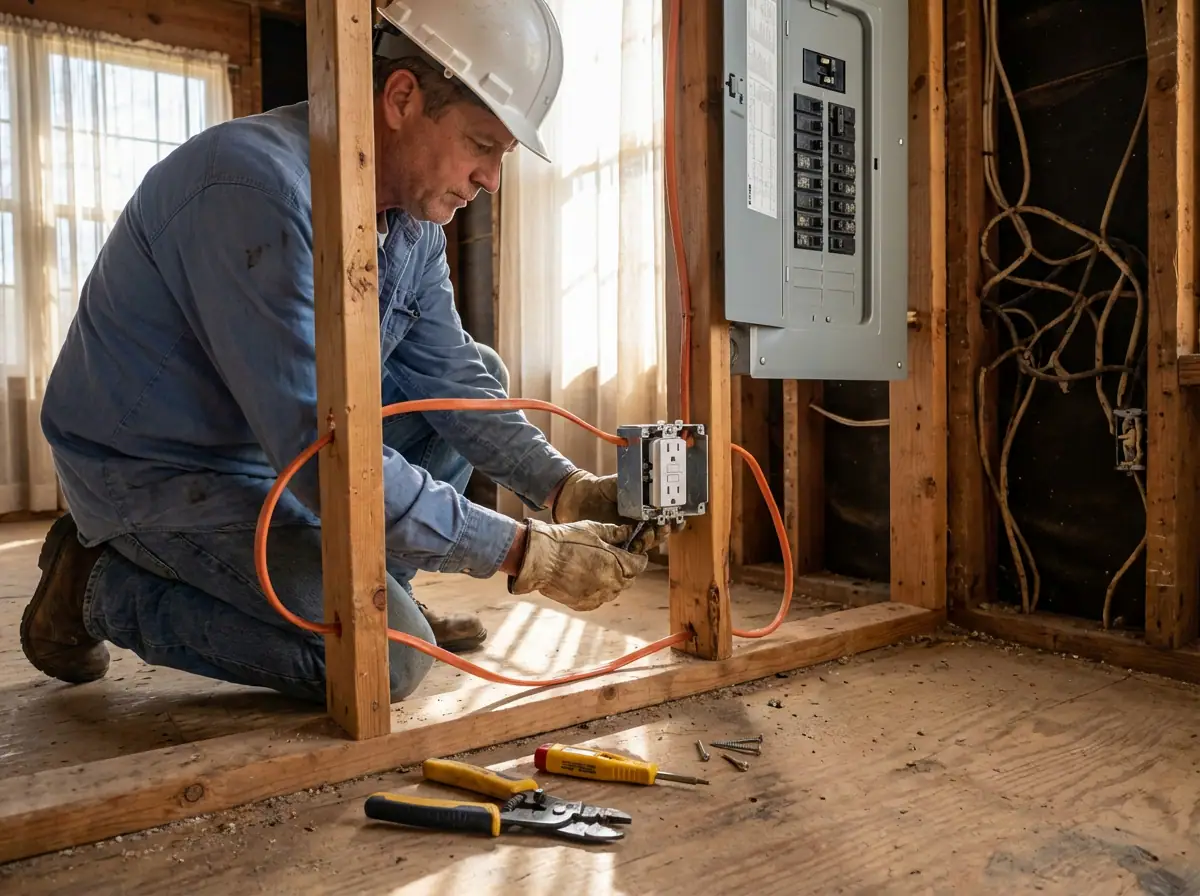
Remodeling your home is one of the most exciting investments you can make as a homeowner. Whether you are opening up a kitchen, converting a garage, finishing a basement, or simply updating an older space, the electrical work behind the walls is what makes everything function safely and efficiently. Yet for many homeowners in Granbury and the surrounding Hood County area, the electrical side of a remodel is also the part that gets the least attention during the planning phase, and that can lead to costly surprises down the road.
At Revamped Electric, we work alongside homeowners, builders, and contractors throughout Granbury, Weatherford, Aledo, Stephenville, and the greater west Fort Worth region to make sure remodel electrical work is done right the first time. If you are gearing up for a renovation project, here is what you need to know before the first wall comes down.
Why Electrical Planning Is the Foundation of Any Successful Remodel
Most people think of electrical work as something that happens at the end of a remodel. The cabinets go in, the flooring goes down, and then someone comes to plug in a few outlets. In reality, a well-planned electrical remodel starts before demolition ever begins.
The reason this matters so much is that walls, ceilings, and floors need to be open for wiring to be routed, updated, or expanded. If you bring in an electrician after drywall is already up, you may be looking at unnecessary patching, replanning, and added labor costs. Coordinating the electrical scope of work early in the project timeline saves time, money, and a lot of frustration for everyone involved.
Beyond timing, planning also ensures your finished space meets current National Electrical Code (NEC) standards, which is a requirement for permitted work in Texas. Code compliance protects your home, your insurance coverage, and your family.
Common Electrical Needs During a Home Remodel
Every remodel is different, but there are several electrical upgrades and installations that come up consistently in residential renovation projects throughout the Granbury area.
Outlet Additions and Relocations
When walls move or room layouts change, existing outlets often end up in the wrong place. New rooms, expanded spaces, and updated kitchens or bathrooms all require outlets to be relocated or added to meet code requirements. Modern NEC guidelines specify minimum distances between outlets along walls, and kitchen and bathroom circuits have their own dedicated requirements to handle the load of appliances and GFCI protection near water sources.
If you are planning a kitchen renovation in particular, the outlet and circuit planning alone can be a significant scope of work. You can learn more about those specific requirements in our Kitchen Electrical Requirements for Your Granbury Home guide, which covers dedicated circuits, appliance loads, and outlet placement in detail.
Lighting Installation and Design
A remodel is the perfect opportunity to rethink your lighting layout. Older homes in the Granbury area were often built with a single overhead fixture per room, which leaves corners dim and makes spaces feel smaller than they are. Modern lighting design layers recessed can lights, under-cabinet lighting, pendant fixtures, and accent lighting to create a more functional and visually appealing space.
New lighting often requires new circuits or at least updated switch wiring, dimmer-compatible fixtures, and in some cases, low-voltage control systems. Getting these runs done while walls are open is far easier than retrofitting them later. Exterior lighting upgrades are also a great complement to interior remodels, improving safety and curb appeal for your property all at once.
Panel Capacity and Circuit Additions
One of the most overlooked aspects of a home remodel is what happens to your electrical panel when you add square footage, appliances, or modern smart home features. Many homes in the Hood County area were built with panels sized for the electrical demands of a previous era. Adding a master suite, a home office, a workshop, or an updated kitchen can push an older panel beyond its safe capacity.
Before adding new circuits, a licensed electrician should evaluate whether your existing panel can handle the increased load, or whether a panel upgrade is the right move. A panel upgrade done during a remodel is often more economical than doing it as a standalone project later, since the timing works well with other open-wall work happening on site. If you are unsure whether your panel is keeping up with your home’s demands, our article on Electrical Panel Upgrade Signs Your Granbury Home Needs One is a helpful starting point.
Faulty Wiring and Hidden Hazards
Remodels frequently uncover wiring that is outdated, improperly installed, or simply past its usable life. Knob-and-tube wiring, aluminum branch circuit wiring, and connections made without proper junction boxes are all common findings in older Granbury homes. When walls open up and these issues are exposed, addressing them immediately is both a safety priority and a legal responsibility for permitted work.
This is actually one of the hidden benefits of a remodel: it gives you a window into what is behind your walls, which can reveal problems that might otherwise go undetected for years. A reputable electrician will walk you through anything that is found and help you make informed decisions about repairs and upgrades rather than pressuring you into unnecessary work.
Permits and Inspections: What Homeowners in Granbury Need to Know
In Texas, electrical work that goes beyond simple device replacements typically requires a permit and inspection through your local jurisdiction. For homeowners in Granbury, this means coordinating with the City of Granbury or Hood County depending on where your property is located. Work in surrounding communities like Weatherford, Aledo, or Stephenville will follow their respective municipal processes.
Permits exist to protect you. They ensure that a licensed professional does the work and that it is inspected by a third party to confirm it meets code. Skipping permits might seem like a way to save time or money upfront, but unpermitted work can create serious problems when you sell your home, file an insurance claim, or face issues down the road.
At Revamped Electric, we handle the permitting process as part of the job. You should not have to navigate that paperwork on your own, and working with a licensed electrician ensures that everything stays above board from start to finish.
How to Choose the Right Electrician for Your Remodel Project
Not every electrician has experience coordinating with general contractors, managing phased electrical work, or handling the scope of a full residential remodel. When you are comparing options, here are a few things worth asking about.
Licensing and Insurance
In Texas, electrical contractors must hold a valid license through the Texas Department of Licensing and Regulation (TDLR). Always confirm that your electrician is properly licensed and carries liability insurance. This protects you in the event of property damage or injury on your job site.
Experience with Remodel and New Construction Work
Remodel electrical work requires a different skill set than simple service calls. Running new circuits through finished spaces, working around existing infrastructure, and timing rough-in work to match a construction schedule all take experience. At Revamped Electric, our team has hands-on experience with both residential remodels and new construction projects throughout the Granbury area, so we understand how to work efficiently within a larger project timeline.
Transparent Pricing and Communication
One of the most common frustrations homeowners have with contractors of all trades is unclear pricing and poor communication. A trustworthy electrician should be able to give you a clear scope of work, a straightforward quote, and honest answers to your questions throughout the project. There should be no surprise add-ons or upsells once the job is underway.
This is something we take seriously at Revamped Electric. Our approach is rooted in the same values that guide military service: integrity, transparency, and doing the job right without cutting corners.
Timing Your Electrical Remodel Work Correctly
If you are working with a general contractor or project manager, your electrician should be looped in early in the planning process. Rough-in electrical work happens after framing is complete but before insulation and drywall. Trim-out work, which includes installing devices, fixtures, and covers, happens near the end of the project after painting is done.
For homeowners managing a DIY remodel or acting as their own general contractor, scheduling the electrician at the right phase is critical to keeping the project moving. Trying to squeeze electrical work in at the wrong time leads to delays, extra charges, and sometimes rework.
If your project includes major additions like a new room or a detached garage or workshop, the electrical planning becomes even more involved and may include trenching for underground conduit, subpanel installation, and coordination with your utility provider for service upgrades.
Making the Most of Your Remodel Investment
A home remodel is a significant financial commitment, and the electrical work you do during that process has a long-term impact on your home’s safety, functionality, and resale value. Cutting corners on electrical is never worth the short-term savings. Properly installed wiring, updated panels, code-compliant circuits, and quality lighting are all things that future buyers notice and that appraisers account for.
More importantly, doing it right the first time means you and your family are protected by a system that performs reliably for years to come. Whether you are remodeling a single room or taking on a whole-home renovation, the electrical side of that project deserves the same level of attention and quality as everything else going into your home.
If you are planning a home remodel in Granbury, Weatherford, Aledo, Stephenville, or anywhere in the Hood County area, Revamped Electric is ready to help you plan and execute the electrical work from start to finish. Reach out through our contact form to get a quote, ask questions, or set up a time to walk through your project. We respond quickly, price fairly, and show up ready to work.