

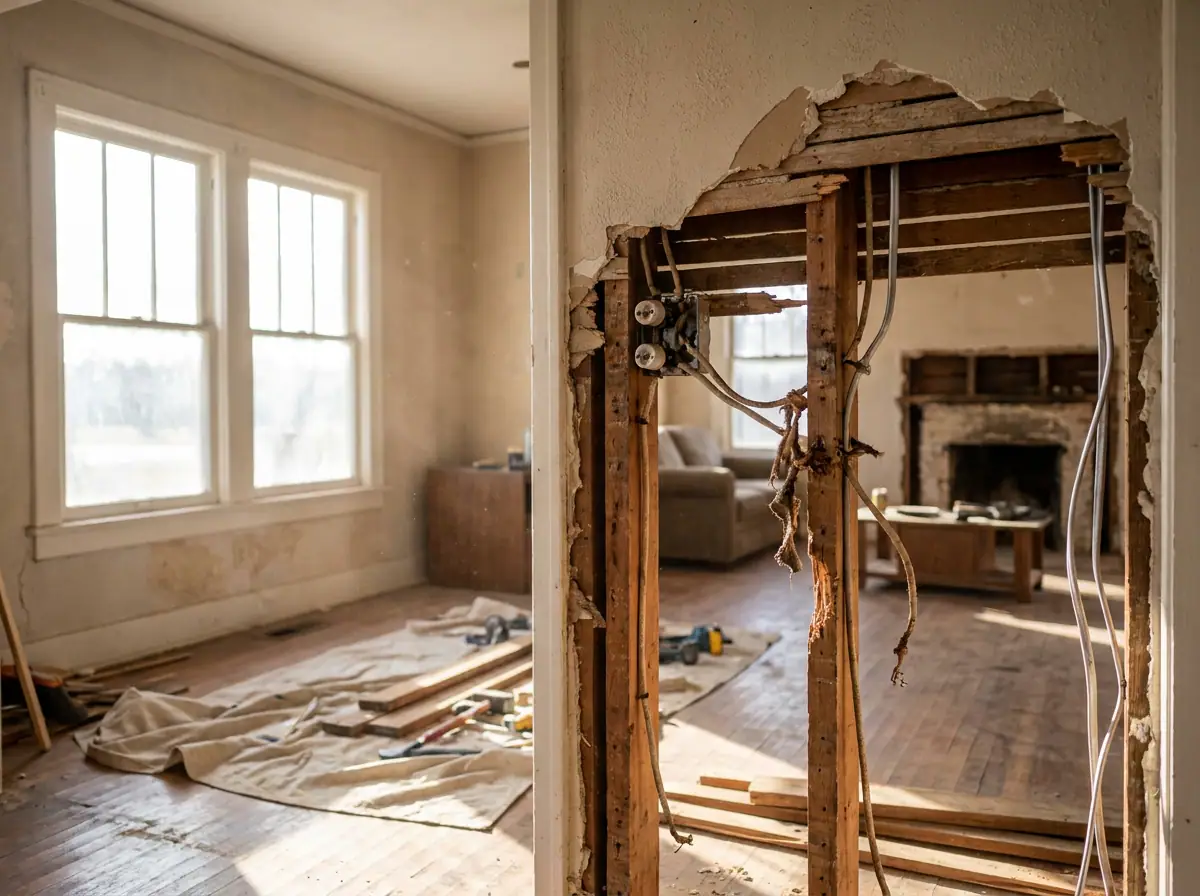
Home renovations are exciting. Whether you are opening up a kitchen, finishing a basement, or finally tackling that bathroom remodel you have been putting off for years, the process of transforming your space is one of the most rewarding things a homeowner can do. But behind the walls, beneath the floors, and above the ceilings of nearly every Granbury home lies an electrical system that demands respect before the first hammer swings or the first stud gets cut.
Electrical safety during home renovations is one of the most overlooked aspects of the remodeling process. Homeowners often focus on tile choices, cabinet finishes, and paint colors while underestimating what it takes to safely manage the electrical work that comes with any meaningful renovation. The result can be costly mistakes, failed inspections, or worse, serious safety hazards that put families at risk long after the project wraps up.
At Revamped Electric, we work alongside Granbury homeowners on renovation projects of every size. This guide breaks down what you need to know about electrical safety before and during your next home renovation, so your project gets done right the first time.
Why Electrical Work and Renovations Go Hand in Hand
Most homeowners do not realize how much a renovation disturbs an existing electrical system. When walls come down, wiring gets exposed. When new walls go up, old circuits may need to be extended, rerouted, or replaced entirely. When appliances get upgraded or rooms get repurposed, the electrical load changes in ways the original system was never designed to handle.
This is especially true in older Granbury homes, where the wiring may already be decades old and operating on outdated standards. Knob-and-tube wiring, aluminum branch circuit wiring, and undersized panels are common finds during renovation projects in Hood County. When a contractor opens a wall expecting clean wiring and finds something from the 1970s instead, the scope of work changes immediately.
Understanding the electrical implications of your renovation before work begins helps you budget accurately, avoid surprises, and stay safe throughout the process. If you are curious about what electrical issues are commonly lurking in older homes, our post on common electrical problems in older Granbury homes is a great place to start.
The Biggest Electrical Safety Risks During a Home Renovation
Disturbing Wiring Without Knowing What Is Behind the Wall
One of the most dangerous moments in any renovation is cutting into a wall, ceiling, or floor without knowing what is on the other side. Electrical cables, live wires, and junction boxes can be hidden anywhere. A saw blade hitting a live wire is not just a project delay. It is a serious shock hazard and a fire risk.
Before any cutting begins, the area should be scanned with a stud finder that detects wiring and conduit, and the relevant circuits should be identified and de-energized at the panel. Even then, it is worth having a licensed electrician evaluate the area if there is any uncertainty about what is running through the walls.
Overloading Circuits During the Renovation Process
Contractors use power tools, temporary lighting, compressors, and other high-draw equipment throughout a renovation. Plugging all of that into existing household circuits can push a system well beyond its rated capacity. Overloaded circuits trip breakers repeatedly, generate heat in the wiring, and can degrade insulation over time.
If your renovation involves an area of the home where heavy equipment will be used for an extended period, it is worth discussing temporary power solutions or identifying dedicated circuits that can safely handle the load. Our team is familiar with the electrical demands of active job sites and can help plan for them accordingly.
Incomplete or Improper Reconnections After Rough-In Work
When general contractors or framers move wiring to accommodate a new layout, they do not always reconnect everything the way it was. Wires get spliced outside of junction boxes, connections get made with mismatched wire gauges, or circuits get left open and unprotected. By the time drywall goes up, those problems are hidden from view.
This is why having a licensed electrician involved in your renovation from the beginning is so important. Electrical rough-in work needs to be inspected before walls close up, and every connection needs to meet current code requirements. Skipping this step can result in wiring violations that surface during a future home inspection or insurance claim.
Permits, Inspections, and Code Compliance in Hood County
In Texas, electrical work that goes beyond simple repairs typically requires a permit. This applies to panel changes, new circuit installations, significant rewiring, and any electrical work that is part of a permitted renovation. Hood County and the City of Granbury have their own permitting processes, and working with a licensed electrician ensures that the work gets permitted and inspected correctly.
Skipping permits might seem like a way to save time and money, but it introduces serious risk. Unpermitted work can void homeowner’s insurance coverage for related claims. It can also become a major obstacle when you go to sell your home, as buyers and their inspectors will flag work that was never signed off by a code official.
Revamped Electric handles the permitting process for electrical work in Granbury and the surrounding Hood County area. We know the local requirements, work directly with inspectors, and make sure every project is fully code-compliant before we consider a job complete. If your renovation includes a panel change or electrical service upgrade, that work especially needs to go through the proper permit and inspection process.
When Your Renovation Reveals an Electrical Problem
Renovations have a way of uncovering issues that were invisible before the work started. It is not uncommon for a homeowner to open up a bathroom for a tile remodel and find wiring that has no ground, outlets that were never connected to a GFCI breaker, or junction boxes stuffed with more wires than they should legally hold. These are not cosmetic problems. They are safety hazards that need to be addressed before the project moves forward.
Common renovation discoveries that require immediate electrical attention include:
- Wiring that shows signs of heat damage, melted insulation, or rodent damage
- Outlets wired without a ground conductor in an area that requires GFCI protection
- Double-tapped breakers in the panel that were added during a previous project
- Aluminum branch circuit wiring connected to devices rated only for copper
- Spliced wires outside of accessible junction boxes, buried in walls or insulation
When these issues come up, the instinct for many homeowners is to push forward and deal with it later. Do not do that. Addressing the problem at the time of discovery is almost always less expensive than coming back to it after the walls are closed. If you suspect your renovation has uncovered something serious, our faulty wiring repair services are available throughout the Granbury area and surrounding communities.
Coordinating Electrical Work With Other Contractors
On larger renovation projects, electrical work does not happen in isolation. It needs to be coordinated with plumbing, HVAC, framing, and insulation. Running conduit and wiring after insulation is blown in, or trying to route circuits after a mechanical contractor has already claimed the chase space, leads to shortcuts and compromises that affect the quality of the final installation.
The general rule of thumb is that rough-in electrical work happens after framing is complete and before insulation and drywall. Trim-out electrical work, which includes installing devices, fixtures, and covers, happens after paint. If your project has a general contractor managing the schedule, make sure your electrician is part of that conversation early and not just called in to fill gaps left by everyone else.
Revamped Electric is experienced in working on active renovation job sites alongside other trades. Owner and Navy veteran Austin Barrett built this company around doing things the right way, and that means communicating clearly, showing up when scheduled, and making sure the electrical side of a project does not become the bottleneck that holds everything else up.
Planning New Electrical Features Into Your Renovation
A renovation is also your best opportunity to add electrical features that would otherwise require tearing open finished walls later. If you are already opening up a space, now is the time to think ahead about what the room will need over the next ten to twenty years.
Some of the most valuable electrical additions to consider during a renovation include:
- Additional outlets placed strategically to reduce reliance on extension cords and power strips
- USB charging outlets built into the wall where phones and devices are commonly used
- Dedicated circuits for home office equipment, kitchen appliances, or workshop tools
- Under-cabinet lighting rough-in in kitchens being remodeled
- Ceiling fan wiring in rooms that currently have only a light fixture
- Outdoor circuit extensions if the renovation touches an exterior wall
The cost of adding these features during a renovation is a fraction of what it would cost to add them after the fact. An outlet that might run a few hundred dollars to install while walls are open can cost significantly more once drywall is in place and a finished room needs to be cut into and patched.
Choosing the Right Electrician for Your Granbury Renovation
Not every electrician has experience working in an active renovation environment. It takes a different skill set to work on a live job site, coordinate with other trades, and problem-solve the wiring challenges that older homes regularly present. When selecting an electrician for your renovation, look for someone with demonstrated experience in remodel work, not just new construction or service calls.
Ask whether they pull permits, whether they carry current licensing and insurance, and whether they can work within your renovation timeline. Ask for references from similar projects, and check online reviews to see how they have handled jobs that did not go exactly as planned.
Revamped Electric has built a strong reputation across Granbury, Weatherford, Stephenville, and the surrounding areas based on exactly that kind of trustworthy, reliable work. You can read what our customers have to say on our reviews page, and you can explore the full range of renovation and remodel electrical services we offer on our remodels page.
Protect Your Investment Before Work Begins
A home renovation is one of the largest investments a homeowner can make. Cutting corners on the electrical side of that investment does not just risk a failed inspection. It puts your home, your family, and your finances at risk long after the project is done.
Getting a licensed electrician involved before work starts, not after a problem surfaces, is the single most effective way to keep your renovation on track and your home safe. Whether you are planning a small bathroom refresh or a full kitchen gut, the electrical side of your project deserves the same attention you give to every other detail.
If you are planning a renovation in Granbury or anywhere in Hood, Parker, Johnson, or Somervell County, reach out to Revamped Electric before the project kicks off. We will walk through the scope of work with you, flag anything that needs to be addressed, and make sure the electrical side of your renovation is handled the right way from start to finish. Contact us today to schedule a consultation and get your renovation started on solid footing.