

Your home’s electrical system works quietly in the background every single day, powering your lights, appliances, HVAC system, and everything in between. Most homeowners don’t think about it until something goes wrong. But waiting for a problem to reveal itself can be dangerous, and in some cases, costly or even life-threatening. Whether you live in a newer build or an older home in the Granbury area, there are electrical safety practices every homeowner should know about and act on. At Revamped Electric, we work with homeowners across Hood, Parker, Johnson, and Somervell counties every week, and the same preventable issues come up time and time again. This guide breaks down the most important electrical safety tips so you can protect your home, your family, and your investment.
Why Home Electrical Safety in Granbury Deserves More Attention
According to the National Fire Protection Association, electrical fires account for tens of thousands of home fires in the United States every year. Many of those fires start silently inside walls, in attic spaces, or behind outlet covers, where no one can see them until it’s too late. In an area like Granbury where older homes sit alongside newer construction, the range of electrical systems varies dramatically from property to property. Some homes still carry outdated wiring or undersized panels that were never meant to handle the power demands of modern life.
The good news is that most electrical hazards are identifiable before they escalate. Knowing what to look for and when to call a licensed electrician can make a significant difference in keeping your home safe.
Common Electrical Hazards Every Homeowner Should Know
Overloaded Circuits and Breakers That Keep Tripping
One of the most common calls we get at Revamped Electric involves breakers that trip repeatedly. A breaker that trips occasionally is doing its job, protecting your circuit from drawing too much current. But a breaker that trips frequently is telling you something important: the circuit is being pushed beyond its rated capacity on a regular basis.
This often happens in older homes where circuits were designed for far fewer devices than people use today. Plugging too many high-draw appliances into the same circuit, such as space heaters, microwaves, or air compressors, can overload it quickly. Rather than ignoring tripped breakers or simply resetting them repeatedly, it’s worth having an electrician evaluate whether you need a dedicated circuit installation or a panel upgrade to handle your actual load.
Outlets That Spark, Feel Warm, or Stop Working
Outlets are one of the most interactive parts of your electrical system, and they give off clear warning signs when something is wrong. If you notice an outlet that sparks when you plug something in, feels warm to the touch, has scorch marks around the face, or simply stops working, these are red flags that should not be dismissed.
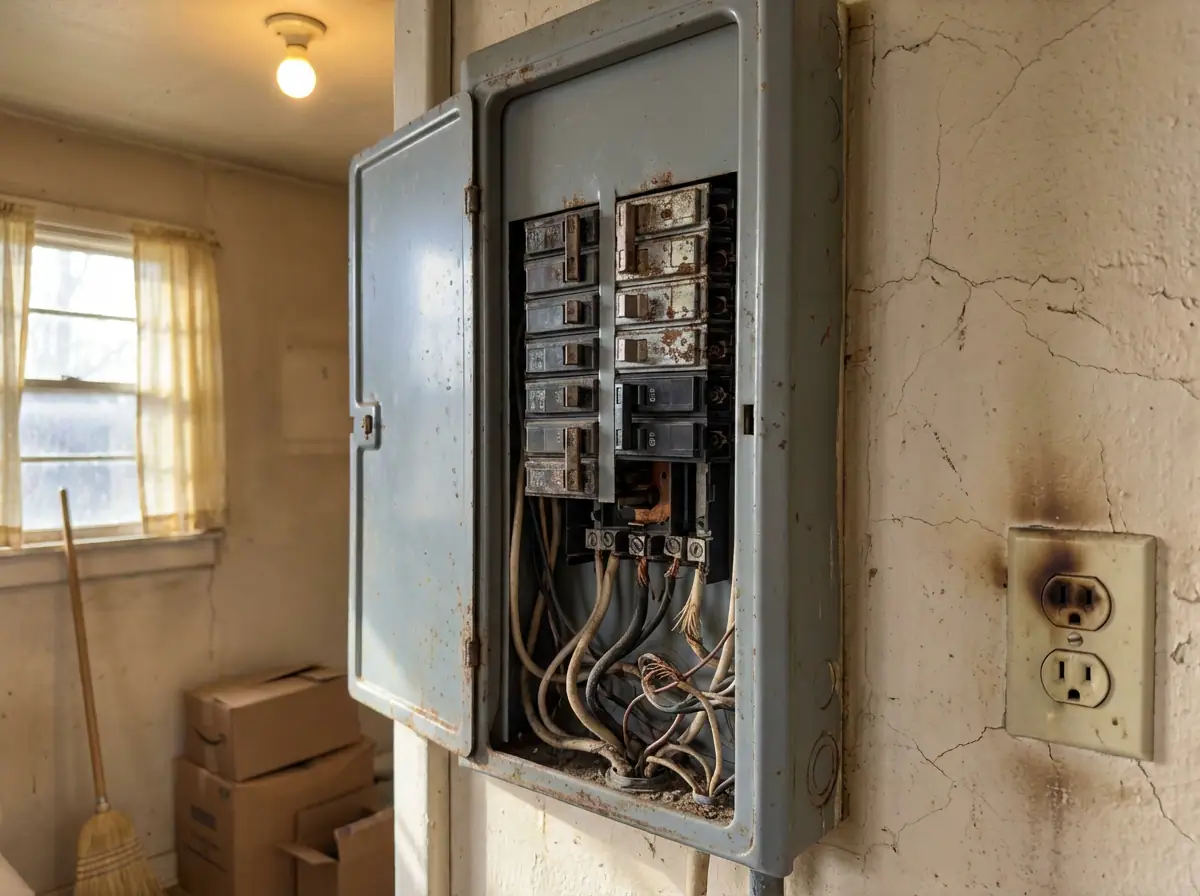
Warm or discolored outlets often indicate a loose connection or wiring issue behind the wall, which can generate heat and eventually cause a fire. A non-working outlet may point to a tripped GFCI, a wiring fault, or a failing device. In any case, a professional inspection followed by proper outlet repair is the right move rather than assuming it will sort itself out.
Flickering or Dimming Lights
Lights that flicker occasionally when a large appliance kicks on are not always cause for alarm. However, lights that flicker without any obvious trigger, dim and brighten randomly, or buzz and hum can point to a loose connection somewhere in the circuit, a failing light fixture, or even issues at the panel level. If the flickering is widespread throughout your home rather than isolated to one fixture, it could indicate a problem with your main electrical panel or the service coming into the home. This is a situation where a licensed electrician should assess the system rather than assuming a bulb swap will fix it.
The Role of GFCI and AFCI Protection in Home Safety
Two of the most important protective technologies in modern residential electrical systems are Ground Fault Circuit Interrupters (GFCIs) and Arc Fault Circuit Interrupters (AFCIs). Many homeowners are unfamiliar with the difference between the two and may not even know which type of protection their home has in place.
GFCI outlets and breakers protect against ground faults, which occur when electrical current travels an unintended path, often through a person. They are required in areas where water is present, including bathrooms, kitchens, garages, and outdoor spaces. AFCI protection, on the other hand, detects dangerous arcing in electrical wiring and is required in bedrooms and living areas in homes built to current code standards.
Older homes in Granbury and the surrounding area may be missing one or both types of protection entirely. Upgrading to proper GFCI and AFCI protection is one of the most impactful electrical safety improvements a homeowner can make. If you want a deeper breakdown of how these two systems compare and when each one applies, check out our post on GFCI vs. AFCI outlets and breakers for Granbury homeowners.
Electrical Panel Safety: When Yours May Be Putting You at Risk
Signs Your Panel Needs Professional Attention
Your electrical panel is the nerve center of your home’s electrical system. When it’s functioning properly, it manages the flow of power to every circuit in your home and interrupts that flow when something goes wrong. When it’s not functioning properly, it can fail to protect you at the exact moment you need it most.
Signs that your panel may need attention include breakers that won’t stay reset, a panel that feels warm or emits a burning smell, visible corrosion or rust, double-tapped breakers (two wires on one breaker), or a panel that uses fuses rather than breakers. Homes in Granbury with panels rated at 60 or 100 amps may also be undersized for the demands of a modern household, especially as more homeowners add EV chargers, home offices, or large kitchen appliances.
Our team handles panel changes and upgrades throughout the Granbury area. If your panel is raising any of these concerns, getting a professional evaluation is a smart first step.
Don’t Ignore Faulty Wiring in Older Homes
Faulty or deteriorating wiring is one of the most serious and least visible electrical hazards in residential properties. Insulation on older wiring breaks down over time, connections loosen, and rodents or pests can cause significant damage to wiring inside walls. Homes built before the 1970s may also contain aluminum wiring or knob-and-tube wiring that does not meet modern safety standards.
Warning signs of faulty wiring include burning smells with no visible source, discolored or charred outlets and switch covers, outlets or switches that are hot to the touch, and circuit breakers that trip more often than they should. Because much of the wiring in your home is hidden behind walls, professional diagnosis is the only reliable way to assess the condition of your system. Learn more about what to watch for in our detailed breakdown of faulty wiring warning signs and risks.
Practical Electrical Safety Habits for Every Homeowner
Beyond having a licensed electrician inspect and maintain your system, there are everyday habits that reduce your risk of electrical accidents at home.
- Never run extension cords permanently. Extension cords are for temporary use. If you find yourself relying on them in a permanent way, it’s a sign you need additional outlets installed.
- Avoid overloading power strips. Power strips are not designed to handle high-draw appliances like refrigerators, dryers, or space heaters. Use dedicated outlets for these devices.
- Keep electrical panels accessible. Do not store items in front of or around your electrical panel. In an emergency, quick access to the panel can be critical.
- Test GFCI outlets regularly. Press the test button on your GFCI outlets monthly to confirm they are working as intended. If a GFCI fails to trip or reset, it needs to be replaced.
- Never attempt DIY electrical repairs beyond the basics. Replacing a light switch or outlet cover is one thing. Anything involving the panel, wiring behind walls, or circuit additions should be handled by a licensed electrician.
- Schedule periodic electrical inspections. Even if nothing seems wrong, having a professional inspect your electrical system every few years is one of the most proactive things a homeowner can do, especially in an older home.
Outdoor Electrical Safety Considerations
Electrical safety doesn’t stop at the front door. Outdoor outlets, lighting, and any electrical equipment exposed to the elements present their own unique risks. Outdoor outlets must be GFCI protected and covered with weatherproof covers rated for outdoor use. Extension cords used outdoors should be specifically rated for outdoor use and should never be left plugged in during rain or extreme weather.
Outdoor lighting wiring that is improperly installed or aging can develop insulation failures that create shock and fire risks. If you’ve noticed outdoor outlets that spark, trip frequently, or show signs of moisture intrusion, those should be evaluated and repaired promptly before a minor issue turns into a major one.
Protecting Your Granbury Home Starts with the Right Electrician
Electrical safety is not a one-time task. It’s an ongoing responsibility that homeowners in Granbury and surrounding communities like Weatherford, Aledo, Benbrook, and Stephenville take seriously when they understand the stakes involved. The issues covered in this guide, from overloaded circuits and faulty outlets to panel concerns and wiring hazards, are all things a qualified electrician can assess, address, and resolve with the right tools and training.
At Revamped Electric, we are a veteran-owned electrical company built on honest communication, fair pricing, and craftsmanship that we stand behind. Owner Austin Barrett served in the U.S. Navy before bringing that same discipline and integrity to the electrical trade here in North Texas. Whether you need a single outlet repaired or a full system evaluation, we treat every job with the same level of care.
If you have questions about your home’s electrical system or want to schedule an inspection, reach out to our team through our contact page. We’re here to give you straight answers, honest assessments, and reliable service that protects your home and your family for the long haul.