

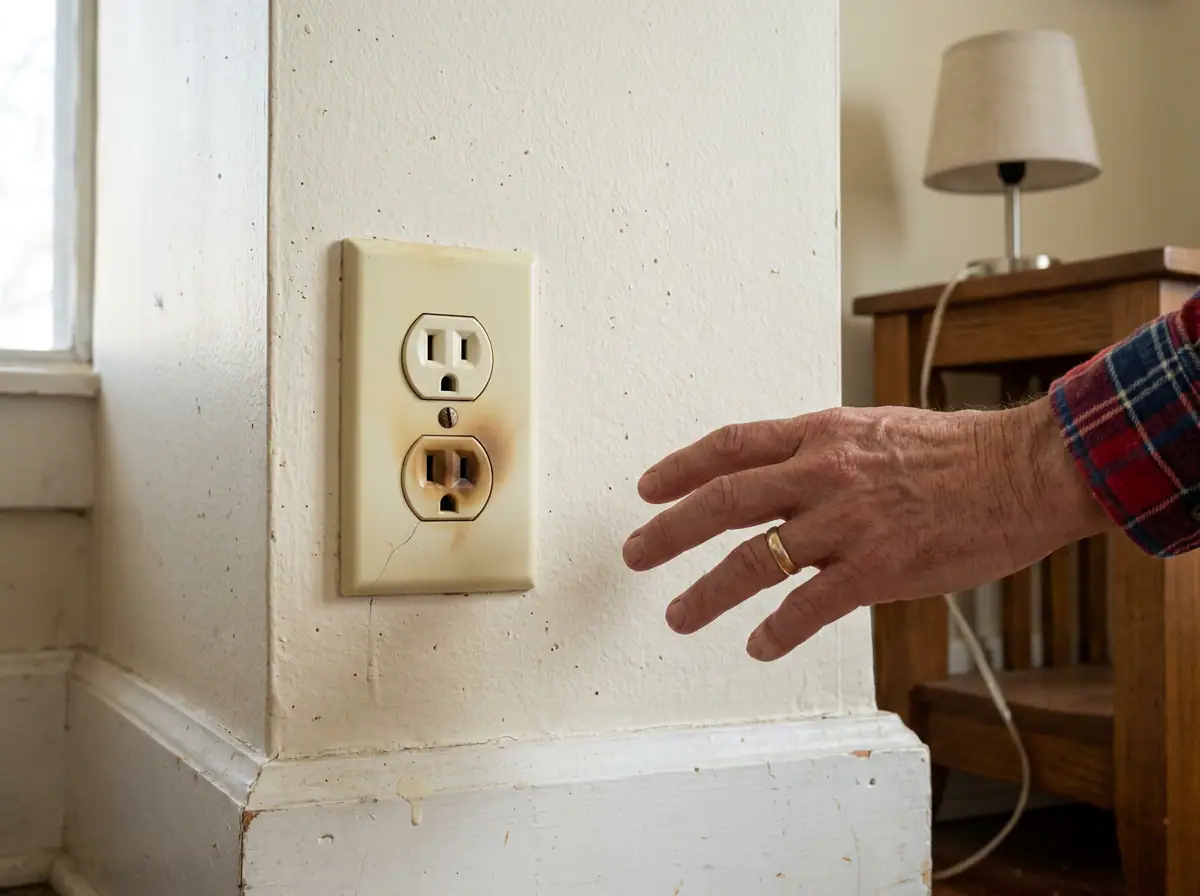
An outlet not working is one of the most common electrical calls a homeowner makes, and most of the time the cause is simple. A tripped GFCI, a breaker that flipped, or a wall switch you forgot about can all take an outlet dead in a second. But a dead outlet can also be the first sign of a loose connection, and a loose connection can get hot. This guide walks you through the safe checks you can do in about five minutes, then spells out the stop signs that mean you should shut off the breaker and call.
We are Revamped Electric, a veteran-owned electrical contractor in Granbury, TX. Owner Austin Barrett (a U.S. Navy veteran) and co-owner Nick Torres, a Granbury native, wrote this the way we would explain it to a neighbor standing in the kitchen with a dead phone charger.
Why Is My Outlet Not Working?
The most common reasons an outlet stops working are a tripped GFCI outlet upstream, a tripped circuit breaker, a switch that controls the outlet, a loose or failed connection, or a worn receptacle. The first three are often fixable in minutes. The last two need a licensed electrician.
- Tripped GFCI: A GFCI outlet in a bathroom, kitchen, garage or outdoors can cut power to other outlets on the same circuit.
- Tripped breaker: An overloaded or faulted circuit shuts itself off at the panel.
- Switched outlet: Some outlets, often in living rooms and bedrooms, are controlled by a wall switch.
- Loose or failed connection: A wire has worked loose behind the outlet or somewhere along the circuit.
- Worn receptacle: The internal contacts have weakened with age and no longer grip a plug or pass power reliably.
What Can I Safely Check When an Outlet Stops Working?
You can safely test the outlet with a lamp, look for a tripped GFCI, reset the breaker one time, and check for a wall switch. None of these require opening a cover plate or touching wiring. If you are ever unsure, stop and call. Our electrical troubleshooting guide covers more of the basics.
Step 1: Test with a known-working lamp
Plug in a lamp or device you know works. Sometimes the problem is the charger or appliance, not the outlet. Test both sockets of the receptacle, since one half can fail while the other still works.
Step 2: Look for a tripped GFCI
Check the bathrooms, kitchen, garage and any outdoor outlets for a GFCI with "TEST" and "RESET" buttons. If the reset button is popped out, press it firmly. If it clicks and holds, test your dead outlet again. Our guide to GFCI outlets in Granbury explains where they are required and why.
Step 3: Check the wall switch
Flip any nearby switches. Many rooms have a half-switched outlet, meaning one socket is controlled by a switch so a lamp can turn on with the light. Someone may have flipped it off long ago.
Step 4: Reset the breaker once
Open the panel and look for a breaker that sits in the middle position or is clearly off. Push it fully to OFF, then back to ON. Do this one time only. If it trips again right away, leave it off. A breaker that will not stay on is telling you something is wrong, and our page on breaker trips explains why repeated resets are not a DIY fix.
Why Is a GFCI Outlet Not Working Making Other Outlets Go Dead?
One tripped GFCI can kill several outlets because GFCIs protect everything wired "downstream" from them, often in different rooms. That is why a dead bedroom outlet can trace back to a tripped GFCI in the garage or a bathroom across the house.
To find the right one, walk through every GFCI in the home and press RESET on each, starting with the garage, exterior walls, kitchen and bathrooms. If a GFCI outlet will not reset, will not hold, or feels hot, the GFCI itself may have failed or there may be a fault on the circuit it protects. GFCIs wear out, and replacing one is quick work for an electrician. For the bigger picture, see our overview of GFCI and AFCI protection.
What If Several Outlets Stopped Working at Once?
When several outlets stopped working at once, it usually points to a shared circuit problem: a tripped breaker, a tripped AFCI breaker, or a loose connection partway along the wiring run. Outlets are often daisy-chained, so one bad connection can cut power to everything after it.
Walk through the same checks: GFCIs first, then the panel. An AFCI breaker (arc-fault protection, common in bedrooms and living areas under newer National Electrical Code (NEC) rules) can trip from an arcing fault such as a damaged cord or a loose wire. If the breaker holds after one reset and everything works, keep an eye on it. If it trips again, or power drops repeatedly, stop. Repeated trips mean the protection is doing its job, and the cause needs to be found, not bypassed. If the whole house or a large section is out, read our page on loss of power.
What Should I Do About Smoking Outlets or a Burning Smell From an Outlet?
If you see smoke or smell burning plastic, stop using the outlet, turn off its breaker at the panel, and call an electrician. Do not touch a scorched or melted cover plate, and do not unplug anything from an outlet that is actively smoking or sparking. If you see flames or cannot safely reach the panel, leave the house and call 911.
Never use water on it
Water and live electrical equipment do not mix. If there is a fire, get everyone out and let the fire department handle it. Our guide on what to do before the electrician arrives covers the steps in more detail.
Why outlets smoke or smell like burning
A burning smell from an outlet and smoking outlets usually come from heat, and heat comes from resistance. Common causes include:
- Loose connections: A wire not tight on the terminal creates arcing and heat.
- Overloaded circuits: Too many high-draw devices on one circuit, like space heaters, can overheat plugs and receptacles.
- Damaged receptacles: Cracked, worn or previously overheated outlets lose their grip and heat up.
- Aging or aluminum wiring: Older wiring and aluminum branch circuits can loosen over time at connections. See our article on aluminum wiring in older homes.
Even if the smoke stops, keep that breaker off until a licensed electrician has looked at it. The damage behind the wall may still be there.
When Should I Stop Troubleshooting and Call a Licensed Electrician?
Stop troubleshooting and call a Texas Department of Licensing and Regulation (TDLR) licensed electrician as soon as you see any sign of heat or damage, or when the safe checks do not bring the power back. Use this checklist:
- Smoke, sparks or a burning smell from an outlet
- Scorch marks, melted plastic or a discolored cover plate
- A cover plate or plug that feels warm or hot
- A breaker that trips again after one reset
- A GFCI that will not reset or will not stay reset
- Buzzing, crackling or sizzling sounds from the wall
- An outlet that works only sometimes or when the plug is wiggled
- Several outlets dead with no tripped GFCI or breaker in sight
- Any situation where you would have to remove a cover plate or touch wires to keep going
Why Do Older Granbury and Hood County Homes Have More Dead or Hot Outlets?
Older homes tend to have more dead or hot outlets because wiring, receptacles and connections age, and past shortcuts show up over time. In Granbury and across Hood County, we run into this in older homes as well as in remodeled ones where earlier work was not done carefully.
One common culprit is the backstab connection. Instead of wrapping a wire around a screw terminal, the wire is pushed into a small hole on the back of the receptacle. Over years of heating, cooling and plugging in devices, those push-in contacts can loosen, causing dead outlets, intermittent power and heat. Older receptacles also lose their tension, and some homes have aluminum wiring that needs special connectors and care. Our guide to faulty wiring explains the warning signs to watch for.
Outlet Not Working in Granbury, TX? Here Is What a Licensed Electrician Does
On an outlet repair call, a licensed electrician diagnoses the cause first, then makes the repair that fits it. We do not guess and swap parts. A typical visit includes:
- Diagnosis: Testing the outlet, checking the circuit, and tracing whether the problem is the receptacle, a connection upstream, or the breaker.
- Tightening or replacing connections: Fixing loose terminals and replacing failed backstab connections.
- Replacing receptacles: Installing new outlets when the old ones are worn, cracked or heat-damaged. See our outlet installation service.
- GFCI or AFCI upgrades: Adding protection where the NEC calls for it or where it makes sense for safety.
What drives the price? Mainly how hard the problem is to find, how many outlets or circuits are involved, how accessible the wiring is, the condition of the existing wiring, and whether upgrades are needed. We give upfront estimates so you know what to expect. For a broader look at what we handle, see our electrical repair in Granbury page.
Outlet Not Working FAQs
Can a dead outlet cause a fire?
Yes, it can. A dead outlet is not automatically dangerous, but the cause may be a loose or damaged connection, and those can overheat. If the dead outlet also has a burning smell, discoloration or warmth, shut off the breaker and call an electrician.
Why does my outlet work sometimes?
An outlet that works only sometimes usually has a loose connection or a worn receptacle that no longer holds the plug firmly. Intermittent power is a warning sign, since loose connections can arc and heat up. It should be inspected.
Should I replace an outlet myself?
We recommend leaving it to a licensed electrician. Replacing an outlet involves live circuits and the wiring behind the wall, and mistakes can create hidden hazards. If you find scorching, aluminum wiring or crowded boxes, it is even more important to have a professional handle it.
Is a warm outlet normal?
A slightly warm cover plate under heavy use can happen, but a plate or plug that feels hot, or any warmth with no heavy load, is not normal. Unplug what you can safely unplug, turn off the breaker, and call an electrician.
If you are in Granbury, Tolar, Cresson, Stephenville or Weatherford and the outlet is still dead after the safe checks, or there is any smoke, burning smell or scorching, turn off that breaker and call Revamped Electric at 817-677-0036. You can also reach us through our contact page. We are a small, veteran-owned team, and Austin and Nick will tell you plainly what is wrong and what it takes to fix it right.