
Your home’s electrical system is designed to handle a specific amount of power, but do you know what that limit is? Many Granbury homeowners don’t think about electrical load capacity until they experience frequent breaker trips, flickering lights, or blown fuses. Understanding how much electrical load your home can safely handle is critical for preventing dangerous overloads, planning renovations, and ensuring your family’s safety.
Whether you’re adding new appliances, planning a home addition, or simply want to understand why certain circuits keep tripping, this guide will walk you through everything you need to know about calculating electrical load capacity and managing your home’s power consumption effectively.
What Is Electrical Load Capacity and Why Does It Matter?
Electrical load capacity refers to the maximum amount of electricity your home’s electrical system can safely deliver at any given time. This capacity is determined by several factors including your electrical panel’s amperage rating, the gauge of your wiring, and how circuits are distributed throughout your home.
Most homes in Granbury are equipped with either 100-amp, 150-amp, or 200-amp electrical service panels. The amperage rating indicates how much current can flow through your system simultaneously. Think of it like water flowing through pipes: a larger pipe (higher amperage) can deliver more water (electricity) at once without causing problems.
Understanding your load capacity matters because exceeding it can lead to serious issues. Overloaded circuits cause breakers to trip repeatedly, wires to overheat, and in worst-case scenarios, electrical fires. As Texas homes increasingly rely on central air conditioning, electric vehicle chargers, smart home devices, and high-powered appliances, many older electrical systems struggle to keep up with modern demands.
How to Calculate Your Home’s Total Electrical Load
Calculating your home’s electrical load doesn’t require an engineering degree, but it does take some careful assessment. Here’s a straightforward approach to understanding your power consumption:
Step 1: Check Your Panel’s Amperage Rating
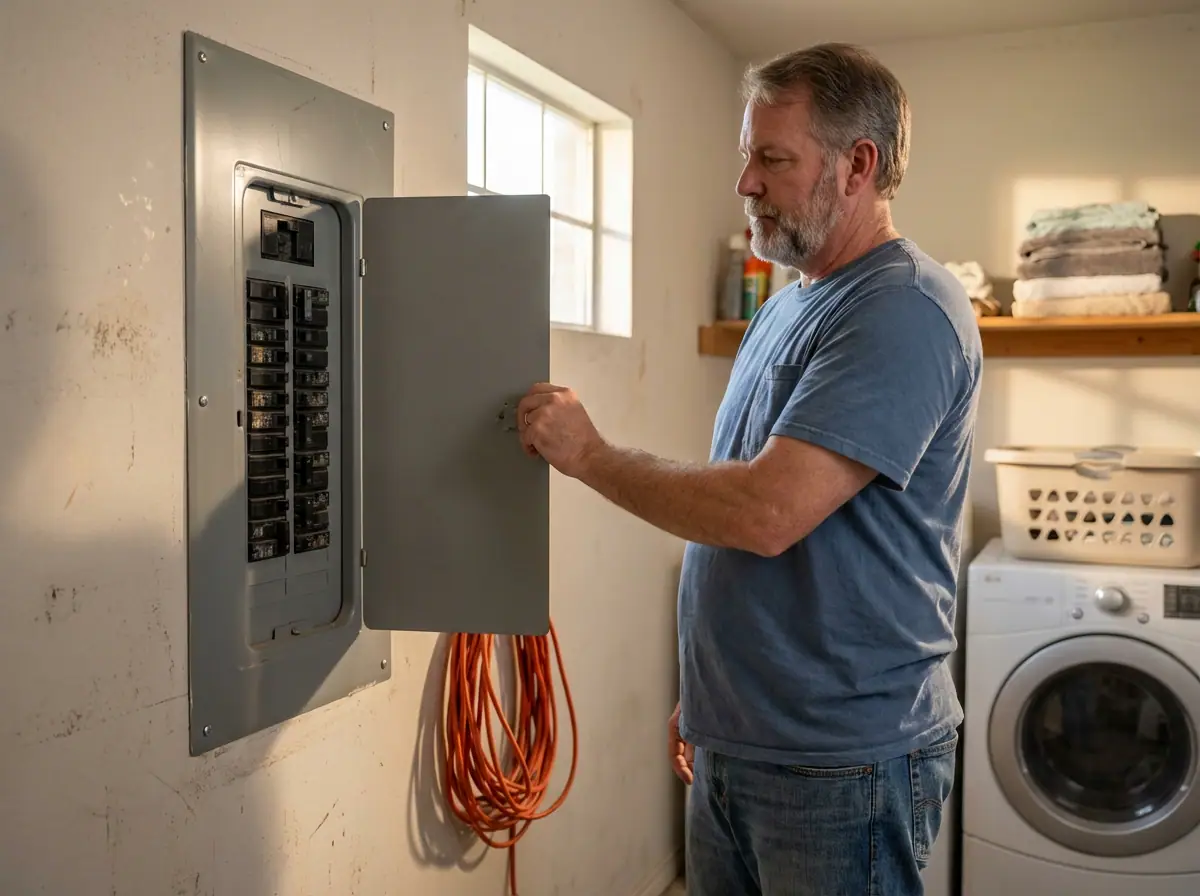
Start by locating your main electrical panel and identifying its amperage rating. This number is usually printed on the main breaker or on the panel door itself. Common ratings include 100, 150, or 200 amps. If you can’t find this information or your panel needs upgrading, a licensed electrician can help you determine your current capacity.
Step 2: List Your Major Appliances and Their Power Requirements
Create an inventory of all major electrical appliances and systems in your home. Look for the nameplate on each appliance, which lists either wattage or amperage. Common items to include:
- Central air conditioning unit (typically 3,000-5,000 watts)
- Electric water heater (3,000-4,500 watts)
- Electric range or oven (2,000-5,000 watts)
- Refrigerator (500-800 watts)
- Dishwasher (1,200-1,500 watts)
- Clothes dryer (3,000-5,000 watts)
- Washing machine (500-1,200 watts)
- Microwave (600-1,200 watts)
- Television and entertainment systems (200-500 watts)
Step 3: Convert Watts to Amps
If appliances list wattage instead of amperage, you’ll need to convert. Use this simple formula: Amps = Watts / Volts. For standard household circuits in the United States, use 120 volts for most outlets and 240 volts for larger appliances like dryers, ranges, and AC units.
For example, a 1,200-watt microwave on a 120-volt circuit draws 10 amps (1,200 / 120 = 10). A 4,800-watt electric dryer on a 240-volt circuit draws 20 amps (4,800 / 240 = 20).
Step 4: Apply the 80% Rule
Professional electricians follow the National Electrical Code guideline that continuous loads should not exceed 80% of a circuit’s capacity. This safety margin prevents overheating and allows for occasional power spikes. If you have a 200-amp service panel, your safe continuous load capacity is 160 amps (200 x 0.80 = 160).
Common Signs Your Home Is Approaching or Exceeding Its Load Capacity
Even if you haven’t done the math, your home will give you warning signs when you’re pushing the limits of your electrical system. Recognizing these indicators early can prevent serious problems and help you know when it’s time to call a professional.
Frequent Breaker Trips
If you find yourself constantly resetting breakers, especially when running multiple appliances simultaneously, you’re likely overloading circuits. While an occasional trip might indicate a single faulty appliance, repeated trips signal that your circuits are drawing more current than they can safely handle.
Dimming or Flickering Lights
Lights that dim when you turn on major appliances like the air conditioner, microwave, or hair dryer indicate voltage drop caused by high electrical demand. This is a clear sign your system is struggling to distribute power effectively across all circuits.
Warm or Discolored Outlets
Outlets that feel warm to the touch or show discoloration around the faceplate are experiencing excessive heat from overloaded circuits. This is a serious fire hazard that requires immediate attention from a qualified electrician for outlet repair or replacement.
Burning Smell or Buzzing Sounds
Any burning odor near your electrical panel, outlets, or switches should be treated as an emergency. Buzzing or sizzling sounds from your panel also indicate dangerous conditions, often related to overloaded circuits or loose connections.
Planning for Increased Electrical Demand in Your Granbury Home
Modern life requires more electricity than ever before. If you’re planning to add new appliances, install an EV charger, finish a basement, or undertake any major remodel, understanding how these changes affect your electrical load is essential.
Adding High-Draw Appliances
High-powered appliances often require dedicated circuits. An electric vehicle charger, for instance, typically needs a 240-volt, 40-50 amp circuit. A hot tub might require similar capacity. Before making these additions, consult with an electrician to determine if your current panel can accommodate the additional load or if you need an upgrade.
Home Additions and Remodels
When planning electrical services for remodels or additions, factor in the electrical requirements early in the design process. Each new room needs outlets, lighting, and potentially dedicated circuits for bathrooms or kitchens. A professional assessment ensures your panel can handle the expansion without compromising safety or performance.
Smart Home Integration
While individual smart devices don’t draw significant power, collectively they add to your baseline load. Smart thermostats, security systems, automated lighting, and voice assistants all consume electricity 24/7. When combined with existing appliances and HVAC systems, these additions can incrementally push an older system toward its limits.
When to Upgrade Your Electrical Panel for Greater Capacity
Many homes in Granbury, particularly those built before 1990, have 100-amp service panels that may struggle with contemporary electrical demands. Upgrading to a 200-amp panel provides substantial headroom for current and future needs.
Consider an upgrade if:
- Your current panel is 100 amps or less and you’re adding major appliances
- You’re installing an EV charger or planning to purchase an electric vehicle
- You’re undertaking a significant home renovation or addition
- Your home uses a fuse box instead of circuit breakers
- You’re experiencing frequent electrical issues despite proper load management
- Your panel is more than 25-30 years old
Panel upgrades are significant projects that require permits, professional installation, and coordination with your local utility company. However, the investment provides peace of mind, improves home safety, increases property value, and ensures your electrical system can handle modern technology for decades to come.
Practical Tips for Managing Your Home’s Electrical Load
While understanding load capacity is important, you can take immediate steps to manage your power consumption more effectively without necessarily upgrading your panel.
Stagger High-Demand Appliance Use
Avoid running multiple high-draw appliances simultaneously. For example, don’t run the dishwasher, clothes dryer, and electric oven all at once during peak hours. Spread out usage throughout the day to distribute the electrical load more evenly.
Upgrade to Energy-Efficient Appliances
Modern Energy Star appliances consume significantly less power than older models. Replacing an old refrigerator, water heater, or HVAC system can reduce your overall load while lowering energy bills. The reduced demand may prevent the need for a costly panel upgrade.
Install Dedicated Circuits for Major Appliances
Ensure that high-demand appliances have their own dedicated circuits. This prevents overloading shared circuits and improves overall system efficiency. Your refrigerator, microwave, dishwasher, and any 240-volt appliances should each have dedicated breakers.
Consider Load Management Systems
For homes with EV chargers or other high-demand additions, load management systems can automatically balance power distribution. These smart devices monitor your home’s total load and adjust power delivery to prevent exceeding capacity, allowing you to maximize your existing panel’s capability.
Professional Assessment: The Smart Way to Understand Your Electrical Needs
While DIY calculations provide useful insights, nothing replaces a professional electrical assessment. Licensed electricians have the tools and expertise to accurately measure your home’s electrical load, identify potential issues, and recommend solutions tailored to your specific situation.
A comprehensive electrical assessment includes:
- Inspection of your main service panel and individual circuit breakers
- Testing of voltage levels and load distribution across circuits
- Evaluation of wiring condition and capacity
- Assessment of grounding and bonding systems
- Recommendations for improvements or upgrades
- Load calculations for planned additions or renovations
This professional evaluation is especially valuable when buying a home, planning renovations, or experiencing persistent electrical problems. The relatively small investment in an assessment can prevent costly repairs, dangerous conditions, and code violations down the road.
Protecting Your Granbury Home Through Smart Electrical Planning
Understanding your home’s electrical load capacity isn’t just about preventing inconvenient breaker trips. It’s about protecting your most valuable investment, ensuring your family’s safety, and preparing your home for the future. As we rely more heavily on electrical systems for everything from climate control to transportation, having adequate capacity becomes increasingly critical.
Whether you’re in an older home with a 100-amp panel or a newer construction with 200-amp service, knowing your limits helps you make informed decisions about appliance purchases, home improvements, and electrical upgrades. The warning signs of an overloaded system shouldn’t be ignored, and regular professional assessments can catch problems before they become emergencies.
For Granbury homeowners concerned about electrical load capacity, the team at Revamped Electric brings veteran-owned reliability and expert knowledge to every assessment and upgrade. Don’t wait for a catastrophic failure to address your electrical system’s limitations. Contact us today for a comprehensive evaluation of your home’s electrical capacity and personalized recommendations that fit your needs and budget. Our experienced technicians can help you understand your current system, plan for future needs, and implement solutions that keep your home safe and fully powered for years to come.