

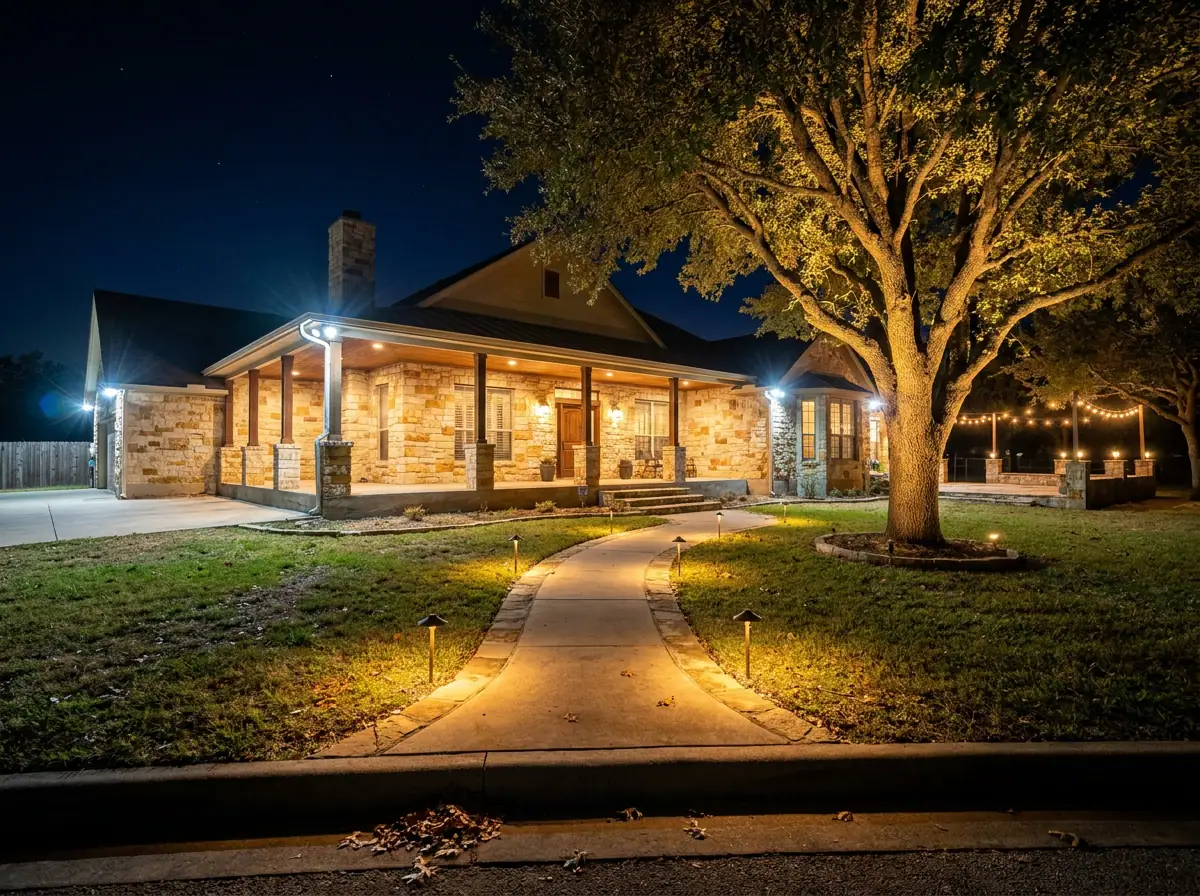
The best way to boost curb appeal, safety and security with outdoor lighting is to layer it: motion-activated floodlights to remove dark zones, pathway and step lights to prevent falls, entry and accent lighting to show off your home, and patio lighting so you can use your outdoor spaces after dark. Every piece should be outdoor-rated, weatherproofed, GFCI-protected where required and on circuits your panel can support, which is why the wiring belongs with a licensed electrician.
Whether you are building a new home, finishing a remodel or just tired of fumbling for your keys in the dark, this guide covers the fixture types, the electrical requirements and how to plan a system that works.
Why Outdoor Lighting Matters More Than You Think
A well-designed exterior lighting system does several jobs at once. It is easy to treat it as cosmetic, but the practical benefits go much deeper.
Security and Deterrence
Well-lit exteriors are one of the most effective and affordable passive deterrents against property crime. Dark corners, unlit side yards, shadowy entry points and poorly lit garages give opportunists cover. Motion-activated floodlights near garages, side gates and back entrances signal that a home is occupied, monitored and maintained. When a light snaps on at 2 a.m. because someone crossed the driveway, most unwanted visitors move along. On larger lots around Granbury, Tolar and Weatherford, where homes sit farther from neighbors and streetlights, a single floodlight over the garage does not cover the ground, and good lighting becomes a first line of defense.
Safety for Family and Guests
Steps, uneven landscaping, sloped driveways and unlit walkways are genuine hazards at night. Pathway, step and entry lighting reduce trips and falls, which matters most when you host gatherings, when children play outside in the evening, or when elderly family members visit.
Curb Appeal and Property Value
A home with thoughtful exterior lighting looks polished and intentional day and night. Uplighting a mature oak, grazing light across a textured facade or accenting a fence line adds depth that a simple porch light cannot. If you plan to sell, exterior lighting is a relatively low-cost upgrade that helps at evening showings: buyers often tour around dusk, and a home that photographs beautifully at dusk stands out. Lighting also makes your landscaping investment visible around the clock.
More Use From Your Outdoor Spaces
Covered patios, pergolas, outdoor kitchens and fire pit areas go largely unused after sunset without the right lighting. Texas spring and fall evenings are some of the best times to be outside, and dedicated exterior circuits and fixtures let you enjoy those spaces well into the night.
Types of Outdoor Lighting and Where They Work Best
Security and Floodlights
High-output fixtures mounted above garage doors, at the roofline, at the corners of the home and along side entrances. Motion-sensor versions only switch on when movement is detected, saving energy while drawing attention exactly when it matters. Many include dusk-to-dawn controls or smart home compatibility. Modern LED floodlights are efficient, long-lasting and available in a range of brightness levels. A licensed electrician hardwires them (no batteries or extension cords), connects them to a suitable circuit, weatherproofs them, and aims them to cover maximum ground without nuisance triggers from passing cars or wildlife, or light spilling toward neighbors and roadways.
Pathway, Step and Landscape Lighting
Low-voltage fixtures line walkways, driveways, steps and garden beds, while uplighting on trees and architectural features such as stone columns adds drama. Plug-in DIY kits exist, but a professionally installed system is more reliable and cleaner looking: no visible cords, no transformer sitting on the ground, and no lights that shift or sink after a rainstorm. It can also be tied to timers or smart controls.
Porch and Entryway Lighting
Your front door is the focal point of the exterior. Wall lanterns or sconces flanking the door, an overhead pendant, or recessed porch lighting frame the entry. Aim for enough light to see the door and surroundings clearly without harsh glare; for most homes a ceiling fixture plus flanking wall lights gives the best balance. These fixtures are usually wired into your home's system, may need new circuits, and must be rated for outdoor or damp locations.
Soffit and Eave Lighting
Recessed lights in the soffit under your roofline wash the walls with light for a clean, modern look without bulky surface fixtures. They are popular on newer homes and work well for porches, patios and the front facade.
Garage and Driveway Lighting
Good overhead and perimeter lighting makes late arrivals and unloading groceries safer, and removes shadows where someone could approach your vehicle unseen. Long driveways, common in Hood County, may use pole-mounted lights, edge lighting and motion-activated garage lights, often with trenching and underground conduit that must meet local code. Many homeowners also add outdoor outlets near the garage for EV charging, holiday lighting or power tools during a lighting upgrade.
Patio, Deck and Outdoor Living Lighting
String lights, recessed deck lights, step lights, post cap lights, post lanterns, wall sconces and overhead fixtures together create a comfortable entertaining space. Permanently mounted commercial-grade string lights over a patio or pergola are a popular request. Rather than running plug-in lights from extension cords out the back door (a safety concern), a dedicated outdoor outlet or hardwired fixture gives you a safe power source right where you need it. Outdoor kitchens, pergolas and covered patios often call for dedicated circuits, and areas near pools or water features require GFCI-protected circuits.
Hardwired, Low-Voltage or Solar?
- Hardwired: connects directly to your home's electrical system and is the most powerful and reliable option. Security floodlights, porch lights, soffit fixtures and entertainment lighting almost always fall here. It needs a licensed electrician and often a dedicated outdoor circuit.
- Low-voltage: a transformer steps standard 120V household current down to 12V, which is safer and more efficient for pathway and accent lighting. The transformer is usually mounted near an outdoor outlet, with wires run through the landscape to each fixture. Having a professional wire the transformer and any new outlets keeps the system safe long-term.
- Solar: works well in sunny Texas for low-intensity accent and pathway lighting, but depends entirely on daily sun, so performance varies with placement, weather and season. For primary security and entertainment lighting, hardwired or low-voltage is more dependable.
LED vs. Traditional Fixtures
LED is now the standard. LED fixtures use a fraction of the energy of incandescent bulbs, last far longer, and produce much less heat, which matters in a Texas summer. The upfront cost can be slightly higher, but savings on your electric bill and replacements make them the smarter choice for most homeowners.
The Electrical Side of Outdoor Lighting
GFCI Protection
Every outdoor outlet and electrical connection must be protected by a ground fault circuit interrupter (GFCI). The National Electrical Code (NEC) requires it for outdoor locations because moisture sharply increases shock risk, and GFCI cuts power instantly when a fault is detected. A proper system uses GFCI-protected outlets and, in many cases, GFCI breakers at the panel. Many older homes in Hood County were built before modern GFCI requirements, so upgrading those outlets is a critical safety step. See our outlet installation service.
Wet and Damp Ratings
Fixtures must be rated for outdoor use. A fixture under a covered porch may only need a damp rating; one exposed to direct rain needs a wet rating. Indoor fixtures used outside, even temporarily, degrade quickly and create fire and shock hazards, and will not pass a home inspection.
Weatherproof Wiring, Conduit and Burial Depth
Outdoor wiring has to survive rain, heat, cold, UV and North Texas storms and humidity. That means the correct wire gauge, outdoor-rated conduit or direct-burial cable, and weather-resistant junction boxes and covers at every connection. Underground cable and conduit have specific burial depth requirements that vary by wiring method; wire buried too shallow is vulnerable to digging, landscaping and foot traffic.
Circuit and Panel Capacity
Adding floodlights or many fixtures to an already loaded interior circuit leads to tripped breakers at best and a fire hazard at worst. Larger systems, a landscape transformer, powered outdoor speakers, or lighting for a detached garage, workshop or big entertaining area may need a new dedicated circuit from the panel (see circuit installation). Older homes in and around Hood County sometimes have panels already near capacity, so an outdoor lighting project is a good time to consider a panel upgrade.
Permits and Code Compliance
Outdoor electrical work in Texas follows the NEC, and local jurisdictions including Hood County and Parker County have their own inspection processes. New circuits, new wiring from the panel and new exterior outlets typically require a permit pulled by a licensed electrician. Permitted, inspected work keeps you safe, keeps your homeowner's insurance valid, and avoids complications when unpermitted work surfaces during a sale or insurance claim.
Common Outdoor Lighting Mistakes
- Using indoor-rated fixtures outside, which degrade quickly and create shock or fire hazards.
- Skipping GFCI protection, which is required on all exterior outlets and certain outdoor circuits.
- Overloading existing circuits instead of checking new loads against capacity.
- Burying wiring too shallow for the wiring method used.
- Ignoring weatherproofing at connections: water intrusion at a junction box is a serious hazard that is easy to prevent and easy to overlook.
What a Professional Installation Involves
- Assessment and planning: we walk your property with you, discuss your goals and check what your panel and existing circuits can support.
- Permits: pulled where the scope requires them.
- New circuits: run with exterior-rated wire and conduit, buried at proper depths for underground runs.
- GFCI-protected outdoor outlets: for transformers, string lights and other plug-in fixtures.
- Fixtures: security lights, sconces, soffit lights and post fixtures mounted and wired with weatherproof boxes and covers. Motion sensors, dusk-to-dawn photocells, programmable timers and smart controllers can be added now or later.
- Testing and cleanup: everything is tested before the job is complete, and we walk you through the system.
A few new exterior fixtures can often be installed in a single day. Projects with underground runs, several new circuits or whole-property landscape lighting take longer, and you get a realistic timeline upfront. Learn more on our lighting installation page.
Planning Tips Before You Start
- Walk your property at night. Note dark and vulnerable areas, spots with uncertain footing, spaces you want to use after dark and features you want to highlight. Security needs and ambiance are different goals and may call for different fixtures and brightness.
- Layer your lighting. Security, pathway and accent lighting together work better and look better than any single type.
- Do not overlight. Strategically placed, well-aimed fixtures look far more polished than blasting every corner at maximum brightness.
- Choose motion-activated or always-on by area. Motion sensors save energy and act as an alert; entry paths and porches often benefit from consistent light.
- Plan smart controls from the start. Scheduling, dimming, motion responses and zone control from your phone need compatible fixtures and sometimes specific wiring, and retrofitting later costs more.
- Think about maintenance access. Fixtures high on a roofline look great but are harder to service; LEDs help with their long lifespans.
- Decide on the look. From clean and minimal to dramatic and layered, knowing your aesthetic goal before buying fixtures saves time and money.
- Bundle with other electrical work. Adding outdoor lighting while an electrician is already on site often reduces overall labor cost.
Keeping Your System Working
Check fixtures periodically for moisture, corrosion or physical damage, replace bulbs promptly, and consider timers or smart controls to automate your schedule. If you notice flickering, unexpected outages or a burning smell near outdoor fixtures, call a licensed electrician rather than diagnosing it yourself. Our faulty wiring service covers these problems.
Commercial Outdoor Lighting
Businesses in Granbury, Weatherford, Stephenville and West Fort Worth rely on exterior lighting to keep customers and employees safe. Parking lot lighting, facade lighting, security floodlights and signage illumination all need professional installation and regular maintenance. We handle commercial lighting projects of all sizes, from new storefronts to upgrades of existing properties.
Choosing the Right Electrician
Look for a local contractor who is licensed, insured and familiar with permitting in Hood County and the surrounding areas, with specific experience in exterior lighting. Transparent pricing, clear communication about the job, and a willingness to answer questions before, during and after the project are good signs.
Frequently Asked Questions
Do outdoor outlets need GFCI protection?
Yes. The NEC requires GFCI protection for all outdoor receptacles and locations.
Is low-voltage landscape lighting a DIY project?
Some homeowners try plug-in kits, but a professional installation is more reliable and cleaner, and ensures the transformer and any new outlets are wired safely.
Is solar lighting good enough?
For low-intensity accent and pathway lighting, it can be. For security and entertainment lighting, hardwired or low-voltage systems are more dependable.
Do I need a permit for outdoor lighting?
Often, if the project adds new circuits, new wiring from the panel or new exterior outlets. A licensed electrician pulls it and handles the inspection.
What is the difference between damp-rated and wet-rated fixtures?
Damp-rated fixtures suit covered areas like porches; wet-rated fixtures are required where they are exposed to direct rain.
Will my panel handle new outdoor lighting?
It depends on available capacity. Large systems may need a dedicated circuit, and panels near capacity may need an upgrade.
How long does installation take?
A few fixtures can often be done in a day; larger projects with underground runs or several circuits take longer.
Revamped Electric is a veteran-owned electrical company in Granbury, founded by US Navy veteran Austin Barrett and Granbury native Nicholas Torres, serving Hood, Parker, Johnson and Somervell counties including Tolar, Stephenville, Aledo, Mineral Wells, Benbrook, Weatherford, Hudson Oaks and West Fort Worth. To plan outdoor lighting for your home or business, call 817-677-0036 or request a quote.