
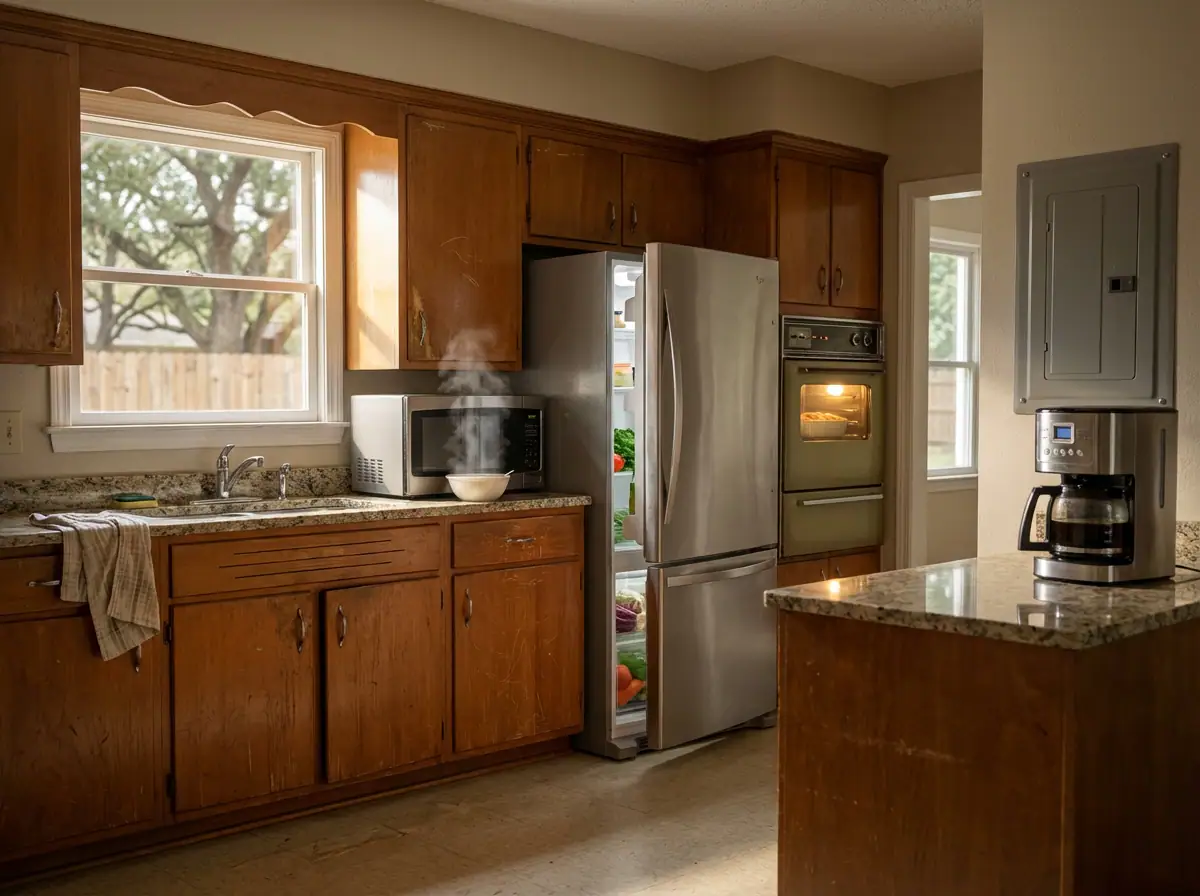
Your Granbury home needs a dedicated circuit for any appliance that draws a heavy or continuous load: refrigerators, electric ranges, dishwashers, disposals, built-in microwaves, washers, dryers, HVAC equipment, water heaters and EV chargers. Shared circuits are fine for low-draw devices such as lamps, chargers, televisions and LED lighting. If your breakers trip, your lights dim when appliances cycle on, or you cannot run two appliances at once, your circuits are overloaded and it is time to add separate lines.
Understanding the difference is not just about avoiding annoying power interruptions. It is about protecting your home, your appliances and your family from electrical hazards, whether you are planning a kitchen remodel, adding new appliances, or simply tired of resetting breakers.
What Is a Dedicated Circuit?
A dedicated circuit is a single electrical circuit that runs from your breaker panel directly to one specific appliance or outlet. A shared circuit supplies power to multiple outlets, lights or devices throughout a room or area. A dedicated circuit reserves its full capacity for one load only. Think of it as a private highway for your refrigerator instead of a congested two-lane road shared with your toaster, blender and dishwasher.
This matters because every circuit has a maximum amperage limit. When too many devices draw power from the same circuit at once, you exceed that limit and the breaker trips to protect the wiring from overheating. Plug a 1500-watt space heater into the same circuit powering your bedroom lights, television and chargers, and you are asking that circuit to handle more than it was designed for. If your wiring is old or undersized and the breaker never trips, the risk is even greater: heat can build up inside your walls and lead to an electrical fire.
In Granbury's older homes, especially those built before the 1990s, dedicated circuits were less common. Families owned fewer electrical devices and appliances were less powerful. Today's homes need electrical infrastructure that can handle everything from smart home technology to kitchen appliances that rival restaurant equipment.
Appliances That Require Dedicated Circuits
The National Electrical Code (NEC) and Texas electrical standards require dedicated circuits for several common household appliances. Beyond what is required, many other devices benefit strongly from having their own circuit.
Kitchen Appliances
The kitchen is the most electrically demanding room in the house.
- Refrigerators: a dedicated 20-amp circuit, because they run continuously and need reliable power to keep food safe.
- Electric ranges and ovens: typically a 240-volt dedicated circuit of 40 to 50 amps, depending on the appliance specifications.
- Dishwashers: their own circuit, usually 15 or 20 amps, for the heating elements and pump motors.
- Microwaves: models rated over 1000 watts should have a dedicated circuit. Smaller countertop models might technically share, but built-in and over-the-range microwaves need their own line.
- Garbage disposals: a dedicated 15 or 20-amp circuit to handle the motor load.
- Countertop outlets: the NEC requires at least two 20-amp small appliance circuits.
If your kitchen was wired decades ago and never updated, there is a strong chance it does not meet current code, especially if you have added appliances over the years.
Laundry
Washing machines need their own 20-amp, 120-volt circuit. Electric dryers require a dedicated 240-volt circuit with a 30-amp breaker. Laundry rooms in older parts of a home may not have these separate circuits, and sharing one circuit between a washer and dryer is a recipe for tripped breakers and possible wiring damage.
HVAC Systems and Electric Water Heaters
Central air conditioners, heat pumps and electric furnaces draw significant power on startup and throughout their cycles. They need dedicated circuits, often 240-volt lines of 30 to 60 amps depending on system size. Window AC units rated above 10,000 BTU should also have their own circuits. Electric water heaters need dedicated 240-volt circuits, typically 30 amps or more.
EV Chargers and Garage Equipment
A Level 2 home EV charger requires a dedicated 240-volt circuit, typically 40 to 50 amps. Workshop tools such as table saws, air compressors and welders draw heavy loads that should never share a circuit with other devices.
Home Office Equipment
Computers, monitors, external drives, printers and charging stations all running at once can strain a standard shared circuit. A dedicated office circuit delivers consistent, clean power and protects sensitive electronics from fluctuations caused by other devices cycling on and off.
Other High-Draw Items
- Sump pumps, so they keep working during storms when you need them most.
- Space heaters, which can draw 1500 watts and should ideally have their own circuit if used regularly.
- Hot tubs and chest freezers.
Shared Circuits: When They Are Appropriate
Not every outlet needs a dedicated circuit. Shared circuits work well for low-draw devices and general lighting:
- Bedroom outlets powering lamps, alarm clocks, phone chargers and similar devices.
- Living room outlets for televisions, speakers and decorative lighting, provided high-draw items like space heaters are not used on them.
- General lighting, since LED bulbs draw minimal power and several rooms can share a lighting circuit.
The key is matching circuit capacity to the expected load and avoiding situations where several high-draw devices run at the same time on one circuit.
Signs Your Home Needs Additional Dedicated Circuits
Frequent Breaker Trips
If a breaker trips more than once or twice, or you constantly reset it when certain appliances run together, the circuit is being asked to do more than it was designed for. Resetting the breaker without fixing the cause is not a fix, it is a delay. Repeated overloading can also damage the breaker itself, so it may fail when you need it most. Learn more about breaker trips.
Flickering or Dimming Lights
Lights that dim or flicker when an appliance kicks on show voltage drops caused by competition on a shared circuit. It is especially common in older Granbury homes when the air conditioner starts or someone uses a hair dryer. These fluctuations can also shorten the life of LED bulbs and damage sensitive electronics. A dedicated circuit for the offending appliance resolves it.
Warm Outlets or a Burning Smell
Warm outlet covers, discoloration around an outlet, or a faint burning odor near outlets or your panel are serious warning signs of heat building up in overloaded wiring, which can melt insulation and create a fire hazard. Stop using the outlet and call a licensed electrician right away for faulty wiring repair. A new outlet cover from the hardware store will not solve it.
You Cannot Run Appliances at the Same Time
If you have to choose between making toast and brewing coffee, or cannot vacuum while the television is on, your home lacks the circuit capacity your household needs.
You Are Adding a New High-Draw Appliance
Whenever you install a new appliance with a significant load, such as a new refrigerator, a hot tub, a chest freezer or an all-electric kitchen, have a licensed electrician check whether your wiring can support it. Getting ahead of the demand is easier than troubleshooting problems afterwards.
Benefits of Installing Dedicated Circuits
- Safety: properly sized wiring means conductors never carry more current than they are rated for, which reduces fire risk and stress on panels, breakers and connections throughout the home.
- Appliance performance and longevity: voltage drops make motors work harder, heating elements cycle improperly and electronic controls malfunction. Stable power helps your refrigerator, washer or HVAC system run as designed and can add years to its service life.
- Home value: updated electrical systems appeal to buyers and remove obstacles during inspections when you sell.
- Code compliance: this matters for home sales, insurance claims and permitted renovations. Non-compliant systems can void insurance policies, fail inspections and create liability issues.
Does Adding a Dedicated Circuit Require a Panel Upgrade?
Not always, but sometimes. Each dedicated circuit needs a new breaker in your panel. If your panel has open slots and enough capacity, a circuit can usually be added without panel changes. If it is full or undersized for modern demands, particularly in older homes, you may need a panel upgrade at the same time, for example moving from a 100-amp panel to 200-amp service. We assess your panel on the first visit and walk you through your options clearly before any work begins.
The Installation Process
- Assessment: a licensed electrician reviews your panel, its capacity and the location of the appliance or outlet that needs its own circuit.
- Sizing: we choose the right wire gauge and amperage for the specific load.
- Wiring: new wire is run from the panel to the destination through walls, attics or crawl spaces. In finished spaces, wires are often fished through existing cavities to minimize drywall damage.
- Connection: we install the correct outlet or connection point and add a new breaker to the panel.
- Permit and inspection: electrical work in Texas requires permits and inspections. In Hood County, work must pass inspection before it is covered or energized. We handle the permit and coordinate with inspectors.
- Testing: we test the circuit before leaving and walk you through what was done.
Most standard installations are finished in a single visit or a few hours. Complex projects with several circuits, long runs through finished walls or a panel upgrade can take several days. Cost depends on circuit length, wire size, labor complexity and whether a panel upgrade is needed, and we give you a clear quote and realistic timeframe before we begin. See our circuit installation service for details.
Is Dedicated Circuit Installation a DIY Project?
No. It involves working inside your electrical panel, running new wire through walls and ceilings, and meeting current NEC code. In Texas this work must be performed by a licensed electrician and, in many jurisdictions, requires a permit and inspection. Unpermitted DIY work can put your insurance coverage at risk, create hidden fire hazards and cause problems when inspectors flag it during a sale. Having it done right is almost always cheaper than fixing DIY mistakes later.
Frequently Asked Questions
What is the difference between a dedicated circuit and a shared circuit?
A dedicated circuit runs from the panel to one appliance or outlet only. A shared circuit powers several outlets, lights or devices in a room or area.
Which appliances need a dedicated circuit?
Refrigerators, electric ranges and ovens, dishwashers, garbage disposals, built-in microwaves, washers, electric dryers, HVAC equipment, electric water heaters and EV chargers. Home offices, workshop tools, sump pumps and regularly used space heaters also benefit from their own circuits.
What size circuit does an electric dryer need?
Typically a dedicated 240-volt circuit with a 30-amp breaker. The washer needs its own 20-amp, 120-volt circuit.
Will I need a new panel to add a dedicated circuit?
Only if your panel has no open slots or not enough capacity. Many homes can add a circuit without panel changes.
How long does installation take?
Most standard installations take a few hours or a single visit. Multiple circuits, difficult runs or panel upgrades can take several days.
Can I install a dedicated circuit myself?
No. In Texas this work must be done by a licensed electrician and often needs a permit and inspection.
Revamped Electric is a veteran-owned electrical company based in Granbury, serving Hood, Parker, Johnson and Somervell Counties, including Tolar, Stephenville, Aledo, Mineral Wells, Benbrook, Weatherford, Hudson Oaks and West Fort Worth. If your breakers are tripping, your lights are flickering or you are adding a new appliance, call us at 817-677-0036 or request a quote for a clear, no-pressure assessment.