

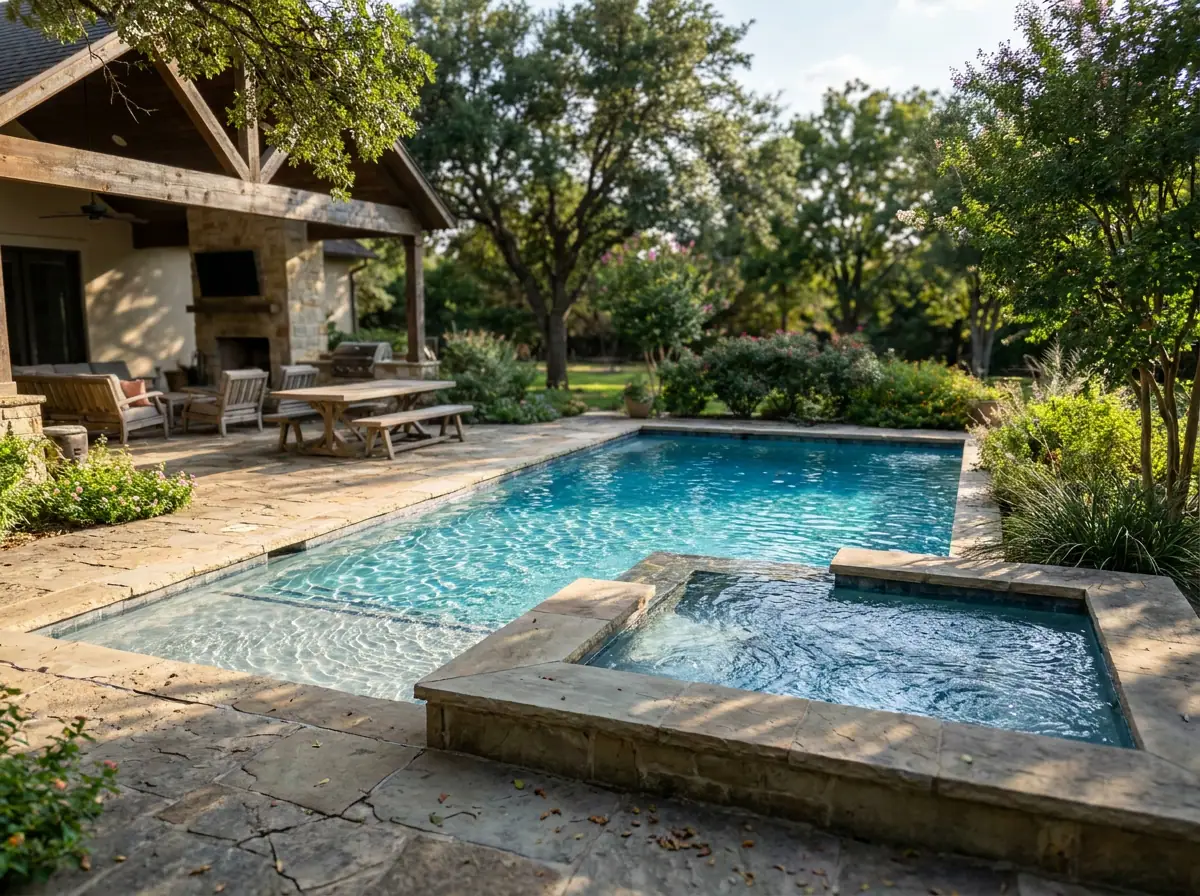
Granbury summers were practically made for backyard living. Whether you’re adding a pool, dropping in a hot tub, building a covered patio with a full outdoor kitchen, or simply upgrading your outdoor entertainment space, one thing ties all of it together: electricity. And outdoor electrical work is not the place to cut corners.
Water and electricity are a dangerous combination, and the National Electrical Code (NEC) has strict requirements for any wiring that comes within range of a pool, spa, or wet outdoor area. The good news is that when the electrical is done right by a licensed electrician, your outdoor space becomes both safe and completely functional for everything you want to do out there. This guide breaks down what Granbury homeowners need to know before the first wire gets pulled.
Why Outdoor and Pool Electrical Work Is in a Category of Its Own
Most homeowners understand that outdoor electrical has to be weatherproof. What many don’t realize is that pool and spa electrical goes several steps further. The NEC outlines very specific setback distances for outlets, lighting, and equipment from water features, and these rules exist for one reason: electrical shock drowning (ESD) is real, and it kills people every year.
Electrical shock drowning occurs when a small amount of AC voltage leaks into the water, creating a charge that can paralyze a swimmer and cause drowning. It doesn’t take much current to be fatal. This is why everything from the panel circuit to the bonding wire around a pool must meet code, and why permits and inspections are required for this type of work in Hood County and surrounding areas.
Beyond the safety issue, outdoor entertainment wiring also has to handle real-world conditions: Texas heat, rain, humidity, bugs nesting in conduit, and physical exposure that indoor wiring never faces. The materials, methods, and protection devices used outdoors are built for that environment, but only when installed correctly.
Hot Tub and Spa Electrical: What the Installation Actually Requires
One of the most common electrical jobs Revamped Electric handles for outdoor spaces is hot tub hookups. Most portable and in-ground spas require a dedicated 240V, 50-amp circuit run from the main panel directly to a disconnect box located within sight of the unit. That disconnect must be at least 5 feet from the water’s edge but no more than 50 feet away, giving the homeowner or emergency responder quick access to cut power.
Here’s what that installation typically involves:
- A new dedicated circuit pulled from the panel sized to the spa’s nameplate requirements
- A weatherproof disconnect box mounted within the NEC-specified distance from the unit
- GFCI protection on the circuit, which shuts off power in milliseconds when a ground fault is detected
- Proper conduit and burial depth if the circuit runs underground to the spa location
- Bonding of all metal components near the water to equalize voltage potential
Trying to run a hot tub off an existing outdoor outlet or a standard extension cord is not just a code violation, it is a serious fire and electrocution risk. Hot tubs draw a significant continuous load, and undersized wiring overheats fast. If your current panel doesn’t have capacity for a new 240V circuit, a panel upgrade may be part of the conversation before the spa ever gets filled.
Pool Electrical: Bonding, Grounding, and Keeping Everything Up to Code
The Difference Between Bonding and Grounding
These two terms get used interchangeably sometimes, but they serve different purposes and both are required for pool installations.
Grounding connects the electrical system to the earth to provide a path for fault current, protecting equipment and reducing shock risk. Bonding connects all the metal components around the pool, including the water itself, the pump, the light housing, the handrails, and any metal within a certain distance of the pool, so they all share the same electrical potential. When everything is bonded, there’s no voltage difference between surfaces, which eliminates the gradient that causes electrical shock drowning.
Both are non-negotiable in pool wiring, and both require an experienced electrician to execute properly. This is not a DIY project.
Pool Lighting and Receptacle Setbacks
The NEC specifies that standard 120V receptacles must be no closer than 6 feet from the inside wall of a pool or in-ground spa. Receptacles between 6 and 20 feet from the water must be GFCI-protected and have an in-use weatherproof cover. Lighting fixtures over the pool must be low-voltage or listed specifically for wet locations. Underwater lights have their own requirements for junction box placement, wiring type, and GFCI protection.
If you’re planning a pool remodel or adding lighting to an existing pool, it’s worth having a full electrical inspection done on the existing pool wiring before adding anything new. Older pool wiring often doesn’t meet current NEC standards, and layering new work on top of out-of-date infrastructure can create problems down the road.
Outdoor Kitchens, Covered Patios, and Entertainment Areas
You don’t have to have a pool for outdoor electrical to get complicated. Covered patios and outdoor kitchens have become one of the most requested upgrades among Granbury homeowners, and the electrical requirements for a fully equipped outdoor entertainment space can rival those of a small indoor kitchen.
What a Fully Wired Outdoor Entertainment Space Might Include
- Dedicated circuits for high-draw appliances like outdoor refrigerators, ice makers, and built-in grills with electric ignition or rotisserie motors
- GFCI-protected outlets throughout the outdoor kitchen and patio area, required within 6 feet of any sink or water feature
- Weatherproof in-use covers on all exterior outlets to protect against moisture intrusion
- Ceiling fan wiring under covered patio structures, often requiring a new circuit and proper fan-rated boxes rated for wet or damp locations
- Outdoor TV and audio wiring run through conduit to keep it protected and clean-looking
- Landscape and accent lighting circuits to highlight the space at night
- String light or pergola lighting circuits on their own circuit to keep living area lighting separate from functional lighting
Getting all of that right from the start means planning the circuits before construction begins, not trying to retrofit wiring after the concrete is poured or the structure is built. If you’re in the planning phase of an outdoor kitchen or covered patio addition, involving an electrician early can save significant time, money, and headaches.
Underground Wiring and Conduit: Doing It Right the First Time
Much of the wiring for pools, spas, and outdoor entertainment areas has to travel underground to reach the load from the panel. The method used and the depth required depend on the type of wiring being installed.
Direct burial cable (UF-B) requires a minimum burial depth of 24 inches under open ground, or 12 inches when paired with GFCI protection. Rigid metal conduit can be buried at 6 inches. PVC conduit requires 18 inches of cover. These aren’t suggestions, they’re NEC minimums, and inspectors check.
Getting this wrong creates two problems. First, it’s a code violation that will need to be corrected before the work passes inspection. Second, shallow burial puts wiring at risk of being cut during future landscaping or digging, which can cause a power outage or, worse, a dangerous fault on an energized conductor.
When Revamped Electric handles outdoor electrical runs in Granbury and the surrounding area, we map out the path, use the appropriate wiring method for the application, and bury everything to code depth the first time. We’ve seen plenty of situations where homeowners brought us in to fix DIY or unlicensed work that failed inspection or caused problems, and those jobs always cost more than doing it right from the start would have.
Surge Protection for Outdoor Equipment
Granbury and Hood County sit in a region that sees its share of spring and summer thunderstorms. Pool pumps, spa control boards, and outdoor entertainment electronics are not cheap, and a nearby lightning strike can fry all of it in an instant. Whole-home surge protection installed at the panel is one of the smartest investments an outdoor entertainer can make, providing a first line of defense before a voltage spike ever reaches your equipment.
Point-of-use surge protectors at individual outlets provide a second layer of protection for items like outdoor TVs and audio equipment. The combination of both gives your system layered protection that dramatically reduces the risk of costly damage from surges and lightning-induced transients.
Permits and Inspections: Why They Protect You
Pool, hot tub, and outdoor entertainment electrical work in Granbury requires permits and inspections. Some homeowners try to skip this step to save time or money, but it almost always backfires. Unpermitted electrical work can void your homeowner’s insurance coverage for related claims, create problems when you try to sell the home, and leave you with wiring that isn’t verified as safe.
When Revamped Electric pulls permits on your behalf and the work passes inspection, you have documentation that the installation was done correctly and meets current code. That’s protection for your family and your investment.
Getting Your Outdoor Electrical Project Started in Granbury
Whether you’re putting in a new pool, adding a hot tub to an existing backyard, or building out an outdoor kitchen and entertainment space from scratch, the electrical plan should be part of your project from day one. The earlier you bring in a licensed electrician, the smoother the entire project goes.
At Revamped Electric, we’ve helped Granbury homeowners across Hood County and into Parker, Johnson, and Somervell counties get their outdoor spaces wired safely and built to last. We’re a veteran-owned, locally rooted company that does honest work at fair prices, and we’ll walk you through exactly what your project needs without overselling or overcomplicating it. Check out what our customers have to say on our reviews page, and when you’re ready to talk through your outdoor electrical project, reach out to us to schedule your service. We make it easy to get answers fast and get your project moving in the right direction.