

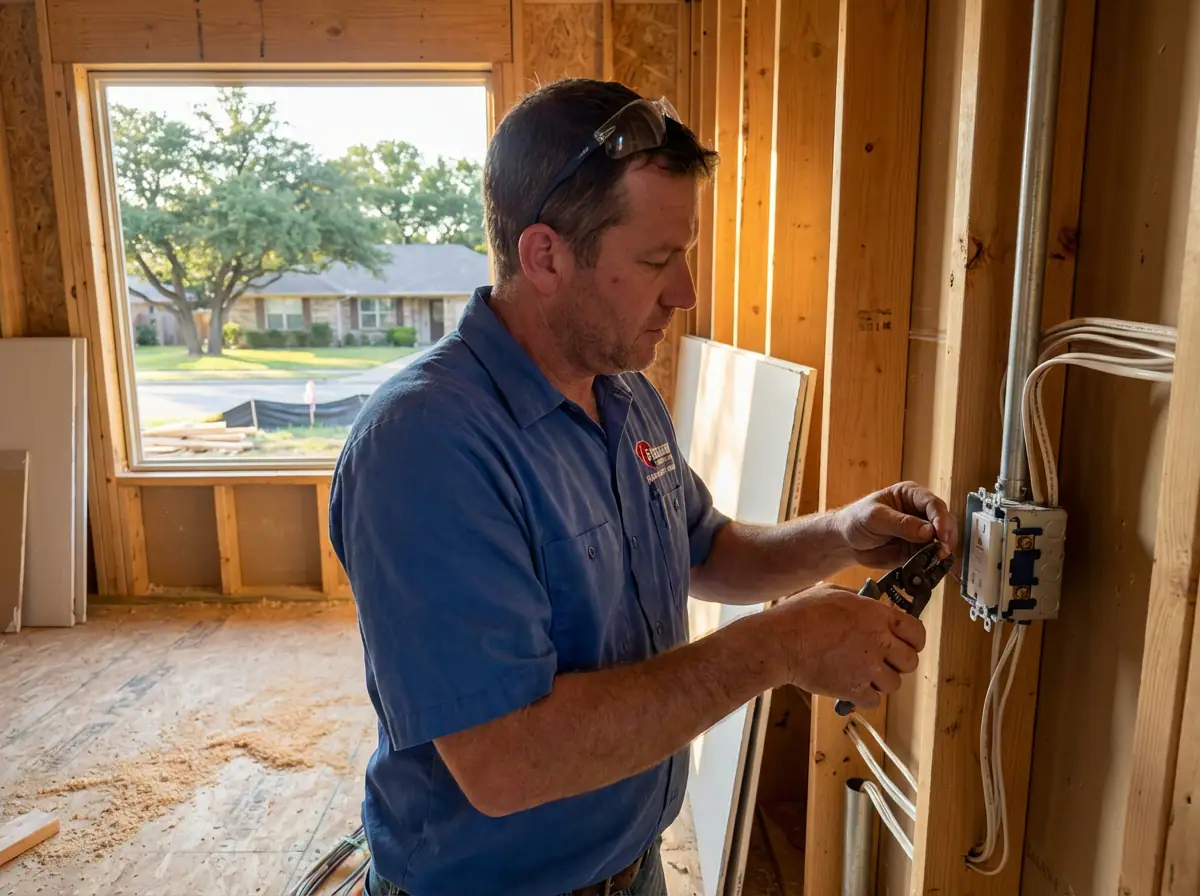
Yes, a Granbury home addition or renovation that adds circuits, moves outlets, changes the panel or runs new wiring almost always needs an electrical permit, and the work must meet the National Electrical Code (NEC) as enforced by the City of Granbury and Hood County. The permit triggers a rough-in inspection before the walls close and a final inspection when the work is done. A licensed electrician pulls the permit, designs the work to code and coordinates both inspections for you.
Skipping this step can lead to failed inspections, denied insurance claims, stalled home sales and real safety hazards. This guide covers what needs a permit, the code requirements that apply to additions and remodels, the violations inspectors catch most often, and how to plan the electrical side of your project.
Why Electrical Permits Are Required
Texas follows the NEC with some state-specific amendments, and local jurisdictions may add their own provisions. When you add square footage or renovate, you are expanding your electrical system, which directly affects your home's safety.
Permits serve several purposes:
- They trigger inspections by qualified officials who verify the work meets current safety codes and catch hazards before they become dangerous.
- They create an official record of the work, which matters during home sales, insurance claims and future renovations.
- They hold the installer accountable: licensed electricians who pull permits stake their professional reputation and license on code-compliant work.
Permits are required for virtually all work involving new circuits, panel modifications or substantial alterations, regardless of the size of the project. A small 10x12 office needs a permit just as an 800-square-foot family room does if it requires new circuits. Simple repairs, such as replacing a light fixture or an outlet cover, usually do not.
What Typically Requires an Electrical Permit in Granbury
- Installing new circuits or branch wiring
- Upgrading or replacing your electrical panel
- Adding outlets, switches or lighting fixtures in new locations
- Running electrical service to detached structures such as workshops or sheds
- Installing dedicated circuits for appliances or EV chargers
- Any work involving your main service entrance
Key Code Requirements for Additions and Renovations
Outlet and Receptacle Spacing
In habitable rooms, no point along the wall may be more than 6 feet from an outlet, so outlets should be no more than 12 feet apart along usable wall space. Kitchen countertops need an outlet every 4 feet, and all countertop receptacles must be GFCI-protected. Bathrooms need at least one GFCI outlet near the sink, and outdoor outlets need GFCI protection and weatherproof covers. Plan outlet installation locations before walls are closed up; spacing outlets too far apart to save money violates code and encourages risky extension cord use.
GFCI and AFCI Protection
GFCI (Ground Fault Circuit Interrupter) and AFCI (Arc Fault Circuit Interrupter) requirements have expanded in recent code updates. GFCIs are required in bathrooms, kitchens, garages, outdoor areas and anywhere near water. AFCIs are now required in most living areas, including bedrooms, living rooms and hallways. Many older homes lack this protection, and a renovation can trigger the requirement to bring affected circuits up to current code.
Lighting and Switching
- Every habitable room needs adequate lighting controlled by wall switches at entry points.
- Closets need lighting, with specific limits on fixture type and placement to prevent fire hazards.
- Stairways need lighting at the top and bottom with three-way switches.
- Exterior doors need illumination controlled from inside.
Professional lighting installation meets these rules while making the space pleasant to use every day.
Circuit Capacity, Wire Sizing and Load Calculations
An addition increases the load on your system, and code requires a load calculation to confirm your panel can handle it. Many older Granbury homes have 100-amp or 150-amp service, which may not be enough when adding significant square footage.
Each circuit must be sized for its use. Standard lighting and outlet circuits typically use 15 or 20-amp breakers with matching wire gauges. Using 14-gauge wire on a 20-amp circuit, for example, is a serious fire hazard. Kitchens and bathrooms have specific dedicated-circuit requirements, and tapping into existing circuits to save money often violates code. Home offices with several computers, workshops and kitchenettes may also need dedicated circuits, which is where new circuit installation comes in.
Junction Boxes and Wire Connections
All connections must be made inside approved junction boxes that stay accessible. Burying boxes behind drywall, splicing without a box or using improper wire nuts are serious violations that create fire risk and make future troubleshooting nearly impossible. Box sizing and fill calculations matter too.
Grounding and Bonding
All new work must be grounded, including metal boxes, devices and equipment, with continuity of the grounding system throughout the addition. Metal structural elements, plumbing and HVAC components must be bonded to the grounding system to prevent dangerous voltage differences between metal parts of the home.
The Permit and Inspection Process
- Application. The electrician submits a permit application to the local building department with the planned work, circuit layouts, load calculations and equipment specifications. The jurisdiction reviews it before issuing the permit.
- Rough-in work. Rough-in electrical happens after framing but before insulation and drywall, so coordinate it with the other trades.
- Rough-in inspection. The inspector checks wire sizing, routing, box installation and connections while the walls are still open.
- Final inspection. Once fixtures are installed, the inspector verifies devices work, circuits are labelled, GFCI and AFCI protection is in place where required, and the installation matches the approved plans.
- Approval. Passing the final inspection puts the work on your home's permanent record as completed to code.
Rushing or skipping steps to hit deadlines usually causes violations and failed inspections that create longer delays.
Why DIY and Unpermitted Work Are Risky
Texas law requires anyone performing electrical work for compensation to be a licensed electrician. Homeowners may legally work on their own primary residence, but they still must obtain permits and pass inspections. Electricity is unforgiving: a mistake can cause electrocution, fire or damage to appliances and electronics, and hidden defects may not show up for months or years.
The consequences of non-compliant or unpermitted work include:
- Failed inspections: correction work, re-inspection fees and delays. If walls are closed, you may have to tear out finished work and pay to do the job twice.
- Fines and orders: local jurisdictions can impose fines, stop-work orders and retroactive permits, sometimes requiring drywall removal so completed work can be inspected.
- Insurance denials: policies typically exclude damage caused by code violations or unpermitted work, leaving you personally liable if a fire occurs.
- Home sale problems: buyers' inspectors often find unpermitted work. Buyers may demand proof of permits, corrections before closing or price reductions, or walk away. Some mortgage lenders will not fund purchases of homes with known electrical code violations.
- Safety: code requirements exist because they prevent fires, electrocutions and other hazards.
How Licensed Electricians Ensure Compliance
- Current code knowledge. The NEC is updated every three years, and licensed electricians complete continuing education to stay current with it and with local amendments.
- Permits and inspections handled. They file the paperwork, schedule inspections at the right stages and address any inspector concerns.
- Passing the first time. Experience with common inspection failures means designs that pass without costly rework.
- Proper materials and methods. Professional-grade materials, load calculations, voltage drop considerations and full system testing.
- Insurance. Liability insurance and workers' compensation protect you if something goes wrong during the project.
Planning Your Project for Compliance and Long-Term Value
Start With an Electrical Assessment
Before finalising plans, have a licensed electrician assess your existing system: panel capacity for new circuits, existing code violations and potential problems. This helps you budget accurately and avoid mid-project surprises.
Design to Code From the Start
Plan outlet placement, circuits and lighting with your electrician during design. It is far easier than retrofitting after walls close.
Think Ahead
- Add extra outlets in convenient spots and dedicated circuits for home office equipment.
- Pre-wire for security systems, smart home devices or future EV charging.
- If the addition pushes your panel near its limit, consider upgrading the panel now to leave room for an EV charger, pool equipment or more living space later.
- Add task and accent lighting locations during construction, when it costs relatively little.
- Choose LED-compatible fixtures, efficient appliances and properly sized circuits to lower running costs.
Budget Realistically
Electrical work is not the place to cut corners. Budget for permits, proper materials and qualified labour; quality work should provide safe, reliable power for decades.
Frequently Asked Questions
Do I need a permit for a small home addition in Granbury?
Yes, if it needs new electrical circuits. Size does not matter: a small office and a large family room both require a permit when new circuits are added.
Can I do my own electrical work in Texas?
Homeowners can legally work on their own primary residence, but they must still obtain permits and pass inspections. Anyone doing electrical work for pay must be licensed.
What inspections will my addition need?
Typically a rough-in inspection after wiring is installed but before walls are closed, and a final inspection after fixtures are installed.
Will my existing panel handle an addition?
Not always. Many older Granbury homes have 100-amp or 150-amp service, which may be insufficient for a large addition. A load calculation will tell you.
What happens if unpermitted electrical work is discovered?
You may face fines, stop-work orders, retroactive permits, opening walls for inspection, denied insurance claims and problems selling your home.
Revamped Electric is a veteran-owned electrician handling home additions and remodels in Granbury and across Hood County and the surrounding areas. We manage the permits, build to code and coordinate inspections to keep your project on schedule. Call us at 817-677-0036 or request a quote to plan your project.